The Ranchall Ball-lightning Event
On Friday 20 November 1987 from 20:23hrs to 20:30hrs (AEST), two Queensland National Parks and Wildlife Service (QNPWS) research rangers conducting field work on Ranchall grazing station, North Bungunya locality, Queensland, Australia, had a close proximity encounter with an extremely large, intense, and long-lived rare atmospheric phenomenon commonly called ‘ball lightning’. However, this name is misleading because there is no spherical form of lightning, and the Ranchall event is most accurately described as a lightning induced photonic emission (LIPE).
I am one of those two rangers and the author of the following documentation of that LIPE encounter. It is by far the most comprehensive record of any so-called ball-lightning* account, and as of May 2021 it comprises:
- The author’s (I/my/me) photograph of the Ranchall ball-lightning (LIPE) [Figure 1].
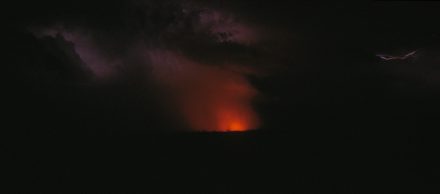
- My daytime photograph of the site, taken 22 May 2001 [Figure 2].

- My original field report of the encounter titled, ‘Report of Atmospheric Phenomenon November 1987’ (pp. 2 & 3), followed by the Addendum, 2001 (with subsequent edits and Endnotes (pp. 4-32), and a Postscript 2020-21 with Endnotes (pp. 33-48).
Supplementary documentation
- The Philosophical Transactions of the Royal Society A (Philos. Trans. Royal Soc. A) publication titled Recent reported sightings of ball lightning: observations collected by correspondence and Russian and Ukrainian sightings’ by John Abrahamson and A.V and V.L Bychkov (pp. 22-24) published online on 4 December 2001, which includes my LIPE and daytime photos and a version of my original field report, edited by Abrahamson.
- Cadastral map with red asterisk marking the LIPE’s (ball-lightning’s) position.
- Reply from Mr Ray Garske, Bureau of Meteorology (BoM) Brisbane, about the copies of my photo and report that I sent the BoM in 1989.
- Two papers that accompanied Mr Garske’s reply: Ball Lightning by J.W. Zillman (Divisional Office, Bureau of Meteorology, Brisbane, August 1960, and Strange Lights Over the Nullarbor by A. T. Brunt (former Regional Director, Bureau of Meteorology, South Australia – undated, but obviously 1988 or soon thereafter).
- Three NS articles, all of them headed ‘Great Balls of Fire’ from: 8 April 2000, 7 June 2006, and 24 Oct 2020. And NS’s 21 December 2001 republication of my Ranchall LIPE photo captioned ‘ball lightning’.
- Other science publications and website pages that reproduced my Ranchall LIPE photo.
- My satirical but serious letter dated 21 December 2020 (pp. 49-58) to New Scientist magazine (NS) upbraiding them for their unresearched, rehashed, and misleading ‘ball lightning’ article in issue No.3305, 24 October 2020, headed ‘Great balls of fire’, with accompanying email replies from New Scientist’s editor and some replies from other researcher and scientist recipients to whom I sent copies of that letter (pp. 49-60).
- Photographs of the camera body and lens with which I photographed the Ranchall LIPE [Figures 3 & 4].
* See first paragraph on p.5.
Report of Atmospheric Phenomenon
By Brett Porter, Ranger, Research and Planning Branch
Queensland National Parks and Wildlife Service
On the evening of 20 November 1987 at approximately 8:05 pm I was in the company of Mr Gordon Maag carrying out field work on stage 1 of the Kangaroo population model validation project II. We were working near the southern boundary of a property named Ranchall, owned by Mr Des Whittle and family. Our position was approximately 280 09’ 30”NS, 1490 39’ 18”E (northwest of Goondiwindi). The nearest main road was the Lapgate Road running north-south and forming the eastern boundary of Ranchall six kilometres east of our position. Individual storm clouds were passing over us from the south-west. The clouds did not form a single large front, but were separated, showing clear night sky between them and displaying independent electrical activity. No rain fell on our position or any of the country we subsequently traversed that night, although Goondiwindi received a severe storm that night which caused major damage to some properties.
At 8:13 pm in order to observe the peculiar behaviour of a conspicuous setting star, we turned our vehicle towards it, stopped the engine and turned out all the vehicle lights. At 8:23 pm, less than 30 seconds after the star had set, I noticed a pink-orange reflection on the inside of my open door. I looked behind me and saw a pink-orange glow emanating from behind the near horizon, a ridge which ran north-south about 300 metres east of our position. This light had not been visible only minutes before as I had been making quick scans of the entire horizon while watching the star. Consequently, I believe that I saw this light no more than one minute after it would have been visible from our position. From the first instant of sighting the light it increased in intensity and size. After approximately three minutes the light reached its maximum intensity and size. This was approximately 2-3 times that shown in the accompanying slide which was taken as the light was fading. At its brightest the light had a base along the horizon of approximately 100 metres and the glow rose skyward in a fan shape about 200 metres high. There was a distinct mistiness surrounding the glow which was possibly associated with the storm activity. At this stage the source which was not visible seemed equivalent to a bank of sportsground illumination lights. It then appeared as if the source would clear the horizon and come into view. However, after about forty seconds at its brightest the light began to fade at approximately the same rate at which it increased its intensity, and the source was not revealed. As the light was fading I saw a white light beam sweep the horizon about 600 further north and apparently much further away. This was most probably the lights of a tractor driven by Mr Whittles son, Paul, who was ploughing about 7 km north by north-east1 of our position. Paul Whittle also observed a pink-orange light that night south of his position at the same time as our sighting. The intersection of the two independent lines of sight confirm the location of the light source as being on Ranchall and not more than three km east of our position.
After I took my photograph we drove towards the fading light. By the time we reached the top of the ridge the light was gone. There was no evidence of the source or its location. There was no fire or embers to indicate a lightning strike, although this was no surprise as the behaviour and intensity of the light was inconsistent with a bush fire. The night revealed nothing but blackness illuminated occasionally by lightning. There was no sound associated with the sighting and the spectacular light show was over in not more than seven minutes.
A subsequent inspection of the area on horseback and by motorcycle did not reveal any evidence of the sighting. The slope of the area where the sighting was made is approximately 1 in 30. Average slope
of the property is approximately 1 in 130. This photograph of the sighting was taken in the last ninety seconds or fading phase of the light with Fujicolor 100 ASA slide film in a Nikon FE2 camera through a Tamron 28-135 macro zoom lens and a Hoya 67 mm Skylight 1B filter. It was set on automatic wide angle (135mm),2 f.4. Exposure time was about 15 seconds.
Endnotes
- Detail shown on readily available recent satellite photos show that the direction is more northeast, not north by northeast.
This should read 28mm, not 135mm. 135mm is the maximum zoom function of that lens, not wide angle. I have a vague recollection that this mistake started as a brief explanation of the difference between wide angle and zoom for the lens, and I neither finished it nor remembered that I hadn’t finished when the typist told me she had an opportunity to type the report for me (see the first paragraph of the section on p. 5 titled Original report and first publication).
Addendum
May 2001 and subsequent edits to the
November 1987 Ranchall ball-lightning* (LIPE) field report:
Report of Atmospheric Phenomenon
By Brett Porter, Ranger, Research and Planning Branch,
Queensland National Parks and Wildlife Service
This addendum to my original 1987 field report titled “Report of Atmospheric Phenomenon” (see preceding pp. 2 & 3) completes the documentation of an observed and photographed extremely rare and extremely large, intense, and long-lived instance of so-called ‘ball lightning’1 (LIPE).2 It comprises the most comprehensive, reliable, and verifiable record of any ball-lightning encounter to date. I observed it in the company of fellow Ranger Gordon Maag between 20:23 and 20:30 hours Australian Eastern Standard Time (AEST) on 20 November 1987 in the southwest corner of Ranchall grazing station (pronounced ranch-all), North Bungunya rural locality, about 100 km west-northwest (WNW) of Goondiwindi, Queensland, Australia. I photographed it at about 20:28 hours.
What is ball-lightning?
Ball-lightning’ is not a ball of lightning. There is no evidence that lightning ever has or can occur as a ball, let alone be maintained in a spherical form.1, 2 Whatever the Ranchall LIPE was, it was not lightning in the shape of a ball. Even researchers† tolerate the misleading name ‘ball lightning’ for rare atmospheric phenomena‡ that have also been called blue orbs, orb lightning, and fireballs. Few photographs exist of anything claimed to be ‘ball lightning’, but it has always been seen concurrently with and near normal lightning. Prior to the Ranchall LIPE, it was only reported as tennis ball to beachball size spheres of detached (free-floating) bright light that was coloured white, yellow, red, or blue, and lasted for only a few to several seconds. Varyingly reported to be stationary or moving slowly, it has usually been seen near the ground – where there are people to see it – but sometimes at altitude from, on, or in aircraft.§ Claims that is has entered buildings, caused injury to people, and damage to objects with which it makes contact, are doubtful and disputable. There is no evidence that any so-called ‘ball lightning’ comprise any of the electrical or thermal properties of normal lightning. All attempts so far have failed to artificially reproduce anything remotely like the reported nature and behaviour of ‘ball lightning’.
Every sighting ever labelled ‘ball lightning’ is undefined and unexplained, except, ironically and dishearteningly, for sightings that are caused by palinopsia (visual aberrations – see Endnote 1, p.26), which is the most plausible explanation for many, if not most sightings.
* Most people have never heard of ‘ball lightning’, and most mishear or misread the term in the first instance. Even though the name is misleading and unfit as a description of the phenomena, it is the commonly used name, so I hyphenate the term as ball-lightning to reduce the chance of misinterpretation and to emphasise that it’s a single concept that has a two-word name.
† In the last section of Endnote 1 on p.28, I discuss the distinction that I make between the categories of researchers, investigators, and speculators. However, for brevity, my references to researcher(s) includes all three categories.
‡ It is plausible that there is more than one type or category of ball-lightning/LIPE.
- Such as Professor Roger Jennison’s 1963 encounter as a passenger on an aircraft.
Lightning Induced Photonic Emission
My hyphenation of ball-lightning doesn’t make the name more appropriate or useful, thus, I coined the term, lightning induced photonic emission (LIPE) for the following four reasons:
- To avoid the unsubstantiated and misleading implication that so-called ‘ball lightning’ has any similarities to normal lightning.
- LIPE acknowledges the significant and justifiable assumption that the Ranchall event was lightning induced.
- LIPE asserts the fact that the Ranchall event emitted photons in at least the visible electromagnetic spectrum (visible light) and was not due to palinopsia.
- LIPE is also an accurate description for all other plausible accounts of analogous phenomena.
I think of the common tennis ball to beachball size reports of little ball-lightning as being mini-LIPEs, and the Ranchall LIPE as a mega-LIPE, due to the extreme magnitude of the latter’s intensity, size, and duration. In this document I use LIPE for what others would call ‘ball lightning’, although, I occasionally use ball-lightning and LIPE together as a reminder of their synonymity and that there is no ball of lightning involved in the phenomena. And I use ‘ball lightning’ (unhyphenated) when it is required as a quotation. See Endnotes 1 & 2, pp. 26 to 28 for further explanation and discussion of the relevant aspects.
Original report and first publication
I completed a handwritten draft of my original field report within a couple of days of the event. However, the report needed to be typed, but at that time computers and word processors were rare and unavailable to me. Although my rudimentary typing skills would have been adequate for the task, I had no access to a typewriter either, so I relied on a typist colleague to type the report on her departmental-issued typewriter. After the slide transparency of my ball-lightning/LIPE photo was returned to me from the film developer, I sent the report to the Regional and Head Offices of QNPWS in Brisbane in December 1987 and to QNPWS Head Office in February or March 1988. I sent my report and copy of the slide to the Queensland Bureau of Meteorology (BoM) in 1989 upon my return from 12 months overseas. The BoM reply from Mr Ray Garske (copy accompanies) – with whom I soon after had a phone conversation about the Ranchall event – confirmed that there was damaging thunderstorm activity in the Goondiwindi area on the night of 20 November 1987. Mr Garske suggested a fireball – an older term used to describe ball-lightning sightings – as a possible explanation for the Ranchall event. Accompanying Mr Garske’s reply was a copy of J.W. Zillman’s (Divisional Office, Bureau of Meteorology, Brisbane) paper titled “Ball Lightning” (August 1960), and a copy of A. T. Brunt’s (former Regional Director, Bureau of Meteorology, South Australia – undated but obviously post 1988) paper titled “Strange Lights Over the Nullarbor” (copies accompany).
The assistance that I needed to have the report typed necessitated that it be concise with minimum detail, and once typed, no amendments could be made, except for minor handwritten corrections. The brevity of my original report was also partly because ball-lightning was unknown to the public, and of zero to little interest to the scientific community, as has also mostly been the case since then. So, I wrote the report to be adequate under the circumstances of that pre-internet era when it was impossible to widely disseminate and futile to try to identify and provide it to anyone other than meteorologists who might be interested in it. Consequently, the report was incomplete in detail, context, and narrative.
Further, the roll of slide-transparency film had to be posted to the developer, then developed, mounted, and returned to me by post, so I did not have my LIPE photograph until about two weeks after I wrote the original report. I was confident, albeit happily mistaken, that the photo would not be as clear and depictive as it turned out to be. These constraints and other work obligations dissuaded me from documenting the encounter as thoroughly as I would have preferred. This addendum is an attempt to amend that deficit.
The Philos. Trans. Royal Soc. A, published an online edited version of my original report on 4 December 2001 (https://doi.org/10.1098/rsta.2001.0917), accompanied by a low-resolution reproduction of my ball-lightning/LIPE photograph and a better-quality daytime photograph of the site in the Society’s article titled “Recent reported sightings of ball lightning: observations collected by correspondence and Russian and Ukrainian sightings” by John Abrahamson and A.V and V.L Bychkov (copies accompany). The lightning track of a horizontal cloud-to-cloud (CC), or perhaps cloud-to-air (CA) discharge on the right side of the photo was cropped from that published image to fit page space. That was unfortunate because the track provides context, proof of CC lightning presence, and evidence of its frequency. The cropped image was republished by New Scientist and several other science publications a few weeks later and was captioned ‘ball lightning’ in each.
Given the growing scientific inquiry about ball-lightning, more detail about the Ranchall ball-lightning/LIPE is relevant for those investigations, and it is appropriate that the historical record of encountering that remarkable event be more complete. This addendum also includes information about the Queensland National Parks and Wildlife Service (QNPWS) macropod (kangaroo) research project that was the reason for my presence on Ranchall, and it also contains more of the human experience of the LIPE encounter, which I hope will be a little entertaining, even if its scientific content is limited.
Location of the Ranchall LIPE event
At that time before GPS, I used a cadastral map to make my original calculation of the LIPE location as 280 09’ 30”S, 1490 39’ 18”E. This was wrong because I incorrectly identified the property portions on the cadastral map of the area.3 I corrected that mistake during my visit to Ranchall on 22 May 2001. I used a boundary fence intersection with an internal fence, the conspicuous tree, distinctive horizon patterns in the LIPE photo as reference features, and a backpack/vehicle antenna GPS system to determine my location in the paddock from where I took the photograph to be 280 04’ 52”S, 1490 33’ 14”E (-28.081111 149.553889). See point 4 on p.17 in the section headed What the Photograph Shows.
The eastern grey kangaroo (EGK) research
In 1987, I was more than a year into a two-year stint as a QNPWS research ranger based at the QNPWS Hermitage Research Station near Warwick, Queensland. I had worked for six years in operations and protected area management, based on seven national parks and in two regional offices in Queensland. I started that six-year period as a cadet ranger on 21 January 1980, ending it as a district ranger in charge of about 14 parks and 11 staff in southern Queensland. The hours as a research ranger were longer and irregular, but it was an enjoyable expansion of my rangering experiences and education, and it was more directly relevant to nature conservation than the visitor-oriented work of protected area management and operations.
On the night of 20 November 1987, Ranger Gordon Maag and I (G&I) were involved in fieldwork for the QNPWS research project called the Kangaroo Population Model Validation Project II (KPMVP II) for eastern grey kangaroos (EGKs – Macropus giganteus).4 The research project was designed and supervised by the then QNPWS Chief Research Officer, Dr Tom Kirkpatrick, and was conducted in cooperation with the Australian National Parks and Wildlife Service (ANPWS) and their macropod researcher, Dr Colin Southwell. Gordon was a talented gunsmith and locksmith by trade, who still works at the Hermitage in various capacities, including the provision of firearms training and accreditation for staff of the now renamed – as of 8 December 1998 – Queensland Parks and Wildlife Service (QPWS).
Gordon and I were responsible for most of the KPMVP II research fieldwork that comprised two main aspects. The first, used a technique in which Dr Southwell trained us that required us to walk about 160 kilometres of line-transects on two privately owned sheep grazing stations: Ranchall, and Pikedale Station south of Stanthorpe, to establish an EGK population estimate for each station. The second aspect was about 60 nights sampling EGKs on those stations by spotlight shooting with neck shots and gathering biological samples and other data from the carcasses. Although the neck is the smallest target of lethality, it had to be used exclusively for sampling because the skulls were needed for the research, and the intact torsos were needed for their commercial value.
Ranchall was and is still owned by Des Whittle and his wife. It is flat terrain with an average of 1:130 slope, and was substantially cleared with about 40% tree cover remaining. It was one of several grazing properties used by a commercial kangaroo shooter, Mr Laurie Gimm, whose operation was based at Warwick, 300km east of Ranchall. All the EGKs sampled for the KPMVP II research were part of Laurie’s commercial harvest quota. Whilst being no consolation to the subject EGKs, it meant that the EGKs sampled for the research were not additional to the commercial harvest quota.
Gordon and I normally worked together, but sometimes with Laurie or his adult children to maximise our opportunities to reach the required sample size of EGKs, and to as quickly as possible achieve the depletion of the local EGK population on which the testing of the research hypothesis relied. The duration of a night’s work varied from 12 to 16 hours depending on the season, the longer sessions being in winter (May to August).
On the night of the ball-lightning/LIPE event, Gordon was driving, and we were both shooting according to where EGKs were seen. However, Gordon was experiencing problems with his rifle of choice that night; an almost vintage lever action .219 Zipper, which, as I explain later, accounts for some of the delay in approaching the event after it appeared.
Firearms and photography
We were equipped with a 2-door four-wheel drive (4WD) (righthand drive in Australia) Toyota Landcruiser trayback ute (utility with drop-sides) and miscellaneous equipment for the sampling fieldwork. I took my personal SLR camera, a Nikon FE2 with a Tamron 28-135mm macro zoom lens and 67mm Hoya 1B Skylight Filter, on only two of our many nighttime forays. The small, cramped cabin of the Landcruiser was already beyond its practical limits with two people, rifles, ammunition, recording equipment, auxiliary lights, food, water, coats, and raincoats,. I usually left the Nikon behind because the work was mostly at night, the camera did not have a flash, I didn’t have a tripod, and it was another piece of fragile bulky equipment that was a chore to deal with in the cabin confines. However, on just two occasions I disciplined myself to manage that inconvenience.
On the night of 20 November 1987 that discipline proved rewarding beyond imagination. It was an improbable choice followed by unusual coincidences that culminated in witnessing and photographing something astonishing and indefinable. Interestingly, the motivation to take my camera was due to my observation of other less spectacular, but nonetheless mysterious unidentified white-lights on three previous evenings. Although I did not have my camera with me for any of the white-light sightings, they were very faint for film photography, so I knew that I was unlikely to be able to capture a clear image without a stable mount or platform for the camera. Also, I was using slow 100-ASA/ISO film (see Endnote 9), which was really only suitable for daytime or flash photography.
After the first white-light sighting, I thought the probability of seeing another was too low to justify loading my camera with much more expensive higher ASA film, which was not readily available over the counter in rural towns and had to be specially ordered. Without a tripod, I was not confident that even high ASA film would be sensitive enough to yield a useful photograph of the low-lumen (dim) white-lights. Even with faster film, I thought I’d still have to be able to steady the camera on some stable platform, such as the vehicle, tree stump, or fence post, and operate a manual long exposure to photograph one of those white-light subjects, which would also have to cooperate for me by remaining still. See the section The white-lights (P. 21) for more details about them.
Through a twilight fog
Sunset that night at our longitude (1490 33’ 14”E) was at 18:33 hours (6:33 p.m. AEST). The end of astronomical twilight 5 at that time of year, at that latitude (280 04’ 52”S), is about one hour and 30 minutes after sunset, which was about 20:00 hours (8:00 pm).
Commencing that night’s fieldwork, Gordon and I left our shearer’s quarters accommodation about 30 minutes before sunset and slowly made our way south about 10 kilometres along Lapgate Road. Then we turned west at Ranchall’s southern boundary and continued our spotlight-searching for EGKs as we drove along Ranchall’s side of the boundary fence.
Weather conditions that night were profoundly unusual and remain unique in my experience. The temperature range recorded that day at Goondiwindi (about 100 km east-southeast of us) were 33.7° C (max daytime) and 18.3° C (min nighttime). I estimate the maximum and minimum temperatures at Ranchall were a couple of degrees higher, and from when we commenced the sampling session to the time of the ball-lightning/LIPE event, I estimate the temperature fell from about 30° C to 27° C. With nil to little air movement at ground level and very high humidity, the effective temperature was high to very high.
As we moved slowly west along Ranchall’s southern boundary, the air reached its dew point (the temperature to which the air must cool to reach 100% relative humidity) but it did not rain. Approximately two kilometres west of Lapgate Road we entered a warm fog that could be felt on one’s skin as a fine mist that condensed to form a thin layer of moisture. This would have been the memorable event of that evening, if not for two other remarkable and unique contenders for that title: the squadron of lightning-lashed clouds (described in the following section), and of course, eventually, the LIPE.
Lightning storm clouds that were moving towards us appeared over the southwest horizon soon after the day darkened. As we moved west, the fog’s density varied, and where it was thickest, it reduced horizontal visibility to about 70%. Although it was generally thinning as we advanced, for a few kilometres the fog was significant enough to interfere with the integrity of the spotlight beam. The fog scattered and dimmed the reflected eye-shine of the wildlife and stock, and although the stars remained visible,6 they were slightly blurred and haloed. As we idled west into the misted darkness, Gordon kept the headlights mostly turned off to reduce the glare that was reflected back at us from the fog, driving mostly by the diffused reflection from the spotlight, visual memory, and night vision. As I explain in the section titled All Downhill (p.14), I think the fog was the eastbound storm clouds that had descended to ground level.
The extreme humidity, and later, the ball-lightning/LIPE, made an association between the two seem plausible. However, it’s possible their only commonality was the power supply of the LIPE, that is, the profoundly unique lightning storm.
Across the leagues of heaven
As we moved west under the shadow of that peculiar eastbound lightning storm, we could see that it comprised a vast night-armada of individual clouds, discharging lightning wholly confined to each cloud, and separated from each other by relatively small gaps through which stars were clearly visible.
As if synchronised across the leagues of heaven, the clouds rapidly semaphored their blazing spectacle of lightning signals within their formation of slowly sashaying shadows that extended back to their lofted port of origin along the western horizon.
Interestingly and I think significantly for the formation of the LIPE, we did not see any cloud-to-ground (CG) lightning strikes that night, nor did we hear the familiar audible cracks of CG strikes. There were no CG strikes near us nor to the farthest extent that we could see those lightning-lit storm clouds. The only audible noise from those clouds was the low rumbly murmur uttered by the continual intracloud (IC), cloud-to-cloud (CC), and cloud-to-air (CA) lightning discharges. No rain fell on any of the country we traversed, nor was there any evidence of rain when we were searching for clues about the LIPE the following day. However, as previously mentioned, a severe thunderstorm struck Goondiwindi and caused significant property damage about 100 kilometres away.
Red giant
At about 20:05 hours, six kilometres west of Lapgate Road and having emerged from the fog, we turned north towards where the LIPE would soon appear. We idled slowly away from the southern boundary, scanning for EGKs, and wondering about the fantastical lightning storm that had been advancing towards us through the fleeing light of a crepuscular sky, its clouds now low overhead and ploughing eastward.
At 20:13 hours, approximately 200 metres north of the southern boundary fence that we had just left, I asked Gordon to turn the car to the west and stop for our first break, allowing us to watch the entertaining animated behaviour of a setting star, and perhaps allow him to sort out the problem with his rifle while we assessed the storm’s intentions.
At 20:23 hours, I flicked my gaze left towards the appearance of a bright pink-orange reflection off the grey-brown inside panel of my open passenger door. I turned to look behind me and saw a noticeably brightening orange-red half-disc, approximately the same diameter and brightness of a full moon (31 arcminutes or 0.5°) approximately 250 metres away on the ridge that formed the near-horizon to the east. I exclaimed a few words of surprise and bewilderment, alighted the vehicle, and turned to face the looming visitor.
After the several seconds that it took to dismiss the mundane probable explanations, I started to feel a sensation that intensified quickly; that unusual but immediately recognisable internal pressure of extreme astonishment, anticipation, elation, and gratitude for being present when something extraordinary is in progress and the unimaginable seems inevitable.
I was also a little bemused. This was the third in a succession of unusual occurrences within just a couple of hours. Gordon, still seated but twisted to his right and leaning out of his open door, was soon sitting in a crimson cocoon, and I, he later told me, looked like I had a bad case of sunburn. I moved to the rear of the vehicle, and stared.
Our slow traverse of the 200 metres from the southern boundary to where we stopped supports my assumptions that the ball-lightning/LIPE commenced between about 20:05 and 20:23 hours, and that the first visible emissions occurred just moments before I saw it at 20:23 hours. However, it doesn’t prove those assumptions. Other possible, albeit unlikely scenarios include: 1). it may have been forming earlier and was too faint to be seen, 2). It may have been washed out by our headlights and spotlight as we approached it, and 3.) for some time it may have been dim/faint, some distance away beyond the eastern near-horizon ridge, and slowly moving towards us.
Stirred, stupendous, and staying awhile
In any situation, especially in a populous city, the LIPE would have evoked surprise, excitement, and some fear. But under those isolated lightning-slashed onyx skies of Ranchall, its significance and spectacle greatly enhanced its transfixingly eerie effect.
We observed the LIPE for between six and seven minutes; about 400 seconds, with about the last 70 seconds spent driving towards it. As I implied in the previous section, it’s unknown how long the ball-lightning/LIPE might have been in existence before it was bright enough for me to notice its reflection off the inside of my door. However, presuming its expansion and brightening was roughly linear, it could have been no more than several minutes if it were stationary or within up to, say, several tens of metres of its location when I first saw it.
As we watched the LIPE’s development, I told Gordon that it was probably a strange type of lightning called a blue orb. Gordon’s reply was insightful and succinct. “Blue ?”, he queried. Given the brilliant rubescence of the event, the irony should not be lost on anyone familiar with the Australian habit (which was Gordon’s habit in particular) of applying the nickname “blue” to red haired people, dogs, horses, and other roan-coloured creatures and objects.*
The intense crimson colour was a surprise but not a deterrent to my conclusion that it was a blue orb. Although I did not see any blue colouration in the Ranchall event, I knew that blue was not a colloquialism, but rather a reference to the colouration of some events. This was also asserted by J.W. Zillman (Divisional Office, Bureau of Meteorology, Brisbane) in his paper titled “Ball Lightning” – August 1960 (copy accompanies) in which he states:
“Ball Lightning appears as a red luminous ball 10 to 20cm in diameter
with a hazy blue outline, …”.
* This seemingly paradoxical colloquialism may have originated from the red/blue hue of uncooked or minimally cooked meat, which is also referred to as blue. The name Virgin Blue given to the new commercial airline in Australia, with its prominent red livery, is a recent high-profile example. Coincidentally and ironically, the emblem of the competitor airline, QANTAS, is the red kangaroo, of which the female of that species is known as a blue flyer; ‘blue’ because of its blue-grey colour, and ‘flyer’ because of its speed and form at the end of the propulsive thrust of its leap.
Something approacheth?
The near horizon to our east, upon or immediately behind which the LIPE was positioned, was a low flat ridge elevated about seven metres above our position. The ridge is a significant topographical feature that rises with a 1:30 (one in thirty) slope above the flat terrain of the wider landscape that has an otherwise average slope of 1:130 (one in one hundred and thirty).
In the first few seconds after sighting the LIPE, I dismissed the possibility of it being some type of machinery. There was no portable device on the property, or anywhere else that I knew of, that could create an effect of that size and intensity.
There was no sound that we could hear coming from the LIPE, and for obvious safety considerations, Des would not allow anyone else to be moving around the property while we were sampling EGKs. I was familiar with the sight of a bushfire at night, so I knew it was not a fire. The light was far too bright and expanding and intensifying rapidly, and there was no smoke. It was my perception that it may be moving with some vector in our direction, and I said to Gordon something like, “Looks like it’s coming this way!”. For about a minute, that perception held as we waited for what would happen next.
The LIPE’s apparent behaviour was consistent with it approaching us; however, it was also consistent just with its rapid increase in size and intensity (candela/lumen7 output), and this became apparent as the likely explanation for most or all of what appeared to be its movement towards us. Although, presuming the increase in its size was similar in all directions, it was indeed approaching us just as a function of its expansion, even if the centre of the phenomenon was stationary or hardly moving.
Charmful, maybe harmful
Astounding and transfixing as the LIPE spectacle was in its early stages, the increasing size and intensity was startling and a little chilling. Its deep red colour included a distinct orange-yellow central emission zone (CEZ), and then at its brightest, the CEZ appeared near-white, about 100 (one hundred) metres wide and surrounded by a brilliant red semiannular (fan-shape) halo about 200 metres beyond that. I expected the dazzling increases in the CEZ’s size and intensity to culminate in it cresting the horizon and revealing itself as a complete disc, fully separated from the ground. However, from our observation position, that did not occur at any phase of the phenomenon, and I presume that the CEZ remained in contact with the ground, or close to it, for the duration of the LIPE’s existence.
Neither Gordon nor I was oblivious to the sense of some possible threat to our theretofore happy dispositions. But for a few moments of those ample 400 or so seconds when we were steeped in the LIPE’s scarlet glare, some amusing scenarios occurred to me. One being of a ‘macropod squad’ with a special spotlight (a la Crocodile Dundee), searching for the kangaroo-shooting rangers. The other, in the style of The Twilight Zone or Outer Limits TV shows, being Gordon and me gazing forlornly through an alien spacecraft porthole at the Earth as a fast-receding blue dot.
‘Ball lightning’s’ reputation is one of unpredictability, as one would expect, given its apparently associated in some way with common lightning. It was also presumed to be extremely energetic, and that was eminently obvious for the LIPE we were observing. Intriguingly, witnesses to some of the usual tennis ball to beachball size ‘ball lightning’ had claimed that it had been harmful to living tissue, and had caused damage to inanimate materials. Evidence for the claims of injury and damage ranges through dubious, disputed, and discredited, with none being verified. However, it was reasonable for us to expect that whatever source was emitting that photonic fusillade would be energetic enough to at least harm us if we came into contact with it, or perhaps even if we were just close enough to it. However, we didn’t detect any heat or sound coming from the LIPE. Although it is a reasonable and plausible notion that LIPEs may release energy in a way that may cause injury or damage, especially mega-LIPEs like the Ranchall example, it’s far from conclusive, or even convincing, that they are dangerous or damaging.
Our thorough post-event searches yielded no evidence of harm, havoc, or damage inflicted by the LIPE, despite the prolonged emission of an enormous amount of visible-spectrum light, and possibly emissions outside that spectrum. The natural mechanisms for producing intense light with very little heat are limited, however, light produced by a light emitting diode (LED), which involves much less heat than an incandescent filament, is worth bearing in mind as a cautionary example that lots of light doesn’t necessarily mean high heat.
Several times, I have been in exposed and vulnerable proximity to high frequency cloud-to-ground (CG) lightning strikes, released and delivered in unfathomable flashes of seemingly random fury, eliciting with each stroke a feeling of shock and imminent danger. The Ranchall LIPE was of an entirely different nature. Moment after moment, it outdid its serenely splendid debut with dazzling increments of effortlessly prolific brilliance emanating from a hulking presence that evoked a steadily rising thrill and hint of peril.
A vehicle is generally well insulated against normal lightning discharges, but the LIPE was obviously not normal lightning, or normal anything in our known reality for that matter, and we did not know to what it might be attracted. It was a little disconcerting that our vehicle was a trove of electrical conductivity, with the only other significant mass of iron nearby being an internal four-strand barbed wire property fence, approximately 50 metres in front of us to the west. My awareness sharpened that we were between the fence and the LIPE.
However, I remained confident that the fence would yield to a ramming assault from our accelerating vehicle. An ignominious departure no doubt, but under the circumstances, it seemed a reasonable, albeit not an inspired contingency to rely on.
Given that we later established there was no apparent damage to vegetation or soil, it’s plausible that, other than temporarily blinding us, we could have been at the centre of the LIPE without it being a threat to us. Thence, I have often wondered, with a little regret, what it would have been like to be inside the CEZ of that LIPE. Although, from the perspective of an observer further away, we would have been within the crimson halo of the emissions at the LIPE’s peak. So, I take some consolation that we were at least within that part of the LIPE, and I’ve wondered, had we been closer, might our proximity have interfered with the LIPE’s formation or continuation.
A rose by any other name
The terms blue orb, orb lightning, and fireball first came to my attention as a teenager when I was involved in boating and sailing. From 1972 to 1978 I crewed each weekend on a pleasure cruiser and occasionally crewed with Mr Rob Wilton, a World War 2 Australian RAF fighter pilot8 and blue water yacht racer. When Rob had been sufficiently regaled with rum, he regaled me with war stories, flying exploits, and his experiences of unusual weather and atmospheric phenomena, such as St Elmo’s Fire and stories of other people’s encounters with fabled blue orbs. All boaties and sailors have a keen interest in weather, but Rob’s stories spurred my curiosity for lightning and enigmatic atmospheric phenomena.
In the late 1970s during my tertiary study years, I found some articles that referred to blue orbs and orb lightning, but the details were scant. The veracity of the phenomenon’s existence was far from established and mostly disputed. No photographs were with the articles, only artist’s impressions.
Compared with the little I had heard and read about ‘ball lightning’, there were three inconsistencies with the Ranchall LIPE event that were profoundly challenging to concluding that what we were observing was the same as or even similar to other reports of so-called ‘ball lightning’. First, the ball-lightning/LIPE’s already enormous size was rapidly increasing, its fearsome brilliance was intensifying, and it was persisting much longer than the duration of one to several seconds that was reported for other sightings of mini-LIPEs.
The legendary rarity of ‘ball lightning’ had made me confident that I would never see it. But in the event that my confidence might be proven unfounded, my imagination did not extend to being in the presence of an event so large, intense, and long-lived. So spectacularly did the Ranchall LIPE command the dark of night to flee, my particular interest in the subject and knowledge of its rarity was a momentary check to accepting that we were indeed witnessing some type of those yet to be explained and defined ball-lightning phenomena.
Nevertheless, it is axiomatic that unusual circumstances that coincide in close proximity are likely to be associated. Given the characteristics of the LIPE, the peculiar lightning storm so close overhead, and perhaps contributed to by the extreme humidity, ball-lightning seemed to be the reasonable conclusion. Whatever the explanation or most appropriate label, it was apparent that we were witnessing a profound and rare atmospheric phenomenon.
Leviathan of LIPE
For the minute or so that the LIPE was at its peak brilliance, its size was still increasing. From the initial semi-disc shape, there was eventually about four-fifths or more of its circular form visible to us, with approximately three-fifths visible when the photo was taken about 90 seconds before the end of the visible light emissions. Presumably, it was approximately symmetrical in all directions and therefore had an apparent volume that was spherical, or spheroid shaped.
I understand that all previous records of ‘ball lightning’ report them to be tennis ball to beachball size. The Ranchall LIPE was many orders of magnitude greater in size, intensity, and duration than all of the vanishingly few claims of mini-LIPE sightings, let alone what any of the few people who have pondered the mystery of ‘ball lightning’ would have imagined it could be.
My original report states that when the LIPE was at its peak, it was approximately 100 metres in diameter. This was just the CEZ alone, not including the halo around the CEZ, and scalable features in the photo justify this estimate. In order to conservatively estimate the LIPE’s volume, if we use the fraction of three-fifths of a 100m diameter sphere instead of the larger four-fifths that we actually saw, the CEZ volume alone was approximately 314,000 m3 (three hundred and fourteen thousand cubic metres), about 410,700 yds3 (four hundred and ten thousand, seven hundred cubic yards) or 11,088,805 ft3 (eleven million, eighty-eight thousand, eight hundred and five cubic feet).
This means that the Ranchall event was at least 1.8 billion to 9.3 million times larger than the usual reported tennis ball size (6.86cm diameter = 0.000169m3) to beachball size (40cm diameter = 0.0335m3) sightings.
If the LIPE was a complete sphere partially hidden by the elevated near horizon, the volume of the CEZ at its zenith was about 523,500 m3 cubic metres), which would have made it 3.09 billion and 15.6 million times larger than tennis ball and beachball sized sightings, respectively. The volume of the CEZ shown in the photo, when the LIPE was about 80% expired, was still at least 5,000 m3, which is about 29.5 million and 149,000 times larger than tennis ball and beachball sized sightings, respectively. It was big!
Blazing behemoth
Accounts of most ‘ball lightning’ sightings indicate their brightness to be equivalent to approximately one to several domestic light bulbs. One 100-watt incandescent bulb produces about 1800 lumens, which means that most ball-lightning sightings are in the range of about 1,800 to 8,000 lumens. I had nothing to measure the lux7 of the Ranchall LIPE, however, in my original report I estimated that at its peak it was equivalent to a “bank of sportsground illumination lights”.
To clarify this comparison, when the LIPE was at its greatest size, we could see about four-fifths of the 100m diameter CEZ disc, which made an apparent planar area facing us that was around 6,300 m2 (six thousand three hundred square metres = 7,534 yd2); about 90% the size of a football field, most of which are approximately 7,100 m2. That entire area of the CEZ radiated light with the near-white colour and squintingly brilliant intensity of sportsground illumination lights, not just the equivalent brightness of the average three-metre by two-metre single bank of sportsground lights.
To make a conservative estimate of the light emitted by just the CEZ at its peak, let’s exclude its much larger halo, and rather than being able to see those four-fifths of the area of a 100-metre diameter CEZ, let’s imagine that we could see only three-fifths of it, which is about 4,700 m2 (four thousand seven hundred square metres = 5,621 yds2). Then to be extra conservative, let’s say that there was the equivalent of just one 100-watt incandescent bulb per square metre, making its total output of visible spectrum light to be at least 8,460,000 (eight million, four hundred and sixty thousand) lumens.
To grossly err on the side of caution, if we use an ultra-conservative estimate of just one tenth this lumen output, it means the LIPE would have still been emitting about seven times the 130,000 (one hundred and thirty thousand) lumens that are needed to illuminate a standard football stadium. Even by the measure of this cautiously implausible dimmer scenario, the LIPE was emitting a colossal amount of light for a long time.
The shrinking and fading of the LIPE seemed to be approximately a reversal of the process of its expansion and brightening.
All downhill
By the time the LIPE appeared, the warm fog that we had encountered early in the evening had either abated or we had moved out of it. However, there were some clues to support my suspicion that the low cloud/fog was still present a few kilometres to the east, where we had encountered it about an hour before.
When we arrived at the position from which we observed the LIPE, we could see stars within about 15° of arc between the south-west horizon (about five kilometres away) and the bases of the most distant of the individual lightning-storm clouds. This means the bases of those clouds would have been at about two kilometres (6,500 feet) altitude above the south-west horizon. The irregular bases of the clouds overhead were much lower. I estimate they ranged from just scores of metres to a few hundred metres at most. I think that as those clouds moved northeast towards us, they were descending, as if down a sky-ramp, until their bases reached ground-level those few kilometres east of our LIPE observation position, where we encountered them as that warm fog we passed through. I also wonder if the low ridge upon which the LIPE occurred may have had some influence on its genesis by way of being closer to the cloud base, and perhaps also because of some quality of its soil or geology.
Lightning refreshments
Visibility was good when the LIPE appeared, but there was still some minor light diffusion through the humid atmosphere. In the first minute of observing it, I told Gordon we needed to get closer, and we needed to do it quickly. My exuberant exhortations seemed a little hasty to Gordon who replied, “I just poured my coffee”. He considered that the event’s increasing size, intensity, and its possible approach made our current propinquity quite sufficient until more data was available about our loomingly brilliant companion.
Notwithstanding the importance of preserving Gordon’s coffee and judicious restraint, our delay in mobilising to approach the light was significantly due to disentangling ourselves from our light refreshments and Gordon’s rifle being in a state of disassembly. There was also the coercive desire to just indulge in watching the astonishing analogue of a nighttime sunrise beneath blushed clouds, coruscated with blue and purple interior lightning bursts, and rent by jagged white lightning flashes skipping across their plump billows.
My compulsion to approach the event stemmed from my inclination to take the experience of the extraordinary encounter as far as I could push it, and of course, the prospect of perhaps a historic photographic first. However, if we had moved more quickly, the changing circumstances may not have allowed me to photograph it at all. And with the minimum of imagination, one could speculate that the delay may have also preserved our health.
Taking the photograph
As the LIPE’s size and brightness diminished, it seemed that we were floundering around while a treasure was irrecoverably slipping away. While Gordon dealt with his slightly more debilitating entanglement, I set up to take the photograph. Although I had resignedly accepted that I was unlikely to capture even the essentials of the event, the relief and glee that perfused my senses to be able to reach for my camera greatly enhances my nostalgia for the encounter. I thought that at best I would gain a keepsake, so, when the developed slides came back, I was exultant about how misplaced my doubts had been.
I did not have a tripod. Although I had quite steady hands and had produced some acceptable photographs using 100 ASA film in daytime shadow with my Nikon from handheld very slow 0.5 to 0.25 second shutter speed exposures, I knew I could not achieve similar results under the circumstances of an elevated pulse rate, diminishing light output from the LIPE, and a longer exposure time needed for each moment’s delay. These troublous aspects gave me more cause to suspect the photo would not be a success.
However, we were granted a final set of unlikely coincidences that favoured my photographic quest, and spared me a lifetime of lamenting the-one-that-got-away.
Gordon, ably assisted by Ranger Bob Laws, had set up the vehicle specifically for shooting. They had fabricated and attached to each door an outboard horizontal padded rail on which to rest the rifle stocks. The rails were offset about 10 cm away from the door and the top of the rails were a few centimetres above the bottom of the door’s window frame. Finally, in our favour, the Tojo (our name for Toyotas in those days) was parked facing west.
I stood facing the LIPE and the outside of my fully open door. I rested the body of my camera on the shooting rail and with the camera lens’ 12.5cm length just long enough to rest on the top of the window glass, I was able to adjust the lens elevation with the window winder (more good fortune – there were few vehicles with electric windows in those days). With the lens set to its widest angle (28mm) at f.4, and when the image was nearly central in the frame, I abandoned what little I knew of the rules of photographic composition, told Gordon to pretend he was dead – which was timely practice for a worst-case scenario – and opened the shutter for a time-lapse exposure. Based on nothing more than a guess, I counted to 15, and then manually closed the shutter. It’s probable that I was counting a little quickly, but I am confident the exposure time was between 10 and 15 seconds.
Daytime photograph
Although I recollect taking a daytime photograph of the LIPE site the following day, I have not been able to find it. A daytime photograph is important for reference, comparison, and scale. So, I recently requested the advice of Des Whittle about the condition of the area compared to nearly 14 years ago. Des’s familiarity with the site justified his confidence that there had been little change in its features since 1987. His three main reasons for this are that: trees in that low rainfall environment grow extremely slowly, there has been no clearing of the site since the LIPE, and no fire has been over it.
I drove to Ranchall with my wife, Terri Sheldon, on 22 May 2001. The location of where I took the LIPE photo in the paddock was obvious and I established its coordinates using GPS. From there, with the same Nikon FE2 camera and Tamron lens, I took an early afternoon photograph of the LIPE location. The almost unaltered vegetation profile on the horizon is striking confirmation of Des’s advice of how little it has changed. Fourteen years after the event, distinctive features on the horizon in the LIPE photograph are still clearly discernible in the daytime photo.
What the Ranchall LIPE photograph shows
The Ranchall LIPE photo is by far the most significant I have ever taken, and I expect the most significant that I ever will take. That it came out at all was profoundly pleasing and its quality was a supreme surprise. In addition to the aforementioned photographic impediments, I was using Fuji slide transparency film, a good quality film, but not best suited for the colours of the LIPE.9 So, for the circumstances, the result was exceptionally gratifying. The following is what I can verify is shown in the photograph:
- In the upper left, the cloud formations are lit by IC* lightning discharges which appear as a blue/purple backlit effect. Overlying some of that and reflected off the cloud is the LIPE’s orange/red colour that is most noticeable above and behind the LIPE’s red halo. This is a useful illustration and evidence of how low the base of the cloud was.
* IC = intracloud. CC = cloud to cloud. CA = clout to air. CG = cloud to ground.
At the LIPE’s brightest, the rubicund reflection off tens of hectares of the low-altitude cloud-base was as if a flame had been put to that vast billowy expanse, creating a spectacular sprawling aurora of magnificent beauty, distinct as a memory, only faintly depicted in the photograph, and altogether impossible to adequately convey.
- In the upper right is the prominent white track of a ragged CC or perhaps CA lightning discharge with some fainter threadlike filaments. During the four- or five-hour course of the storm, the IC/CC/CA discharges would have numbered in the many tens of thousands. We worked under that storm’s fusillade of lightning discharges for its full duration, and those were the only types of lightning we witnessed; there was never any CG lightning strike that we saw or heard.
- There is a conspicuous yellow/orange central emission zone (CEZ). For the entire duration that we observed the LIPE there was always a CEZ, and it was always the brightest area; crimson at first, brightening to yellow, and ultimately to near white. Except for the period of about fifty to sixty seconds when the CEZ was fearfully brilliant and starkly differentiated, the CEZ was always clearly discernable, but with a subtle gradation of intensity and colouration into the adjacent yellow, orange, and red hues.
- Where the left-hand edge of the CEZ intersects the horizon, there is a small dark fuzzy wedge-shaped image. Conveniently enough, this is a tree. It is a brachychiton, probably Brachychiton populneus, commonly called a kurrajong. It was about five- and one-half metres high in 1987. According to my calculation with an inclinometer, it is now about seven metres high, as shown in the 2001 daytime photo. In 1987, we used that tree to navigate our approach to the LIPE and to verify its location the next day when we did the daylight search.
In the LIPE photo, about four-fifths (the upper four metres) of the height of the kurrajong are visible, so the scale is reliable for comparison. When the LIPE was at its peak, the tree seemed to be some distance inside the CEZ, because its image became more illuminated and displayed feathery margins, compared to its dark silhouette against the redder CEZ at the start of the event.
- The kurrajong tree was almost due east of where I took the photo, and according to my vehicle odometer during my 2001 visit, it was 270 metres away. However, the sharply undulating tussocky terrain required zig-zag deviations to traverse, so the straight-line distance to the tree was no more than 250 metres. Using the scale provided by the tree, even during the LIPE’s fading phase when the photo was taken, about 90 seconds before the visible emissions ended, the CEZ was still about 25 metres in diameter.
The approach
We were moving towards the LIPE within 10 seconds of me closing my camera’s shutter, but approaching it was frustratingly slow. We intermittently used the headlights and spotlight to pick the best route over the rough, tussocky, low vegetation that obscured the ground and provided the effect of driving over small boulders. The diminishing LIPE did not exhibit any peculiar behaviour as we approached it, and with the vehicle lights off, we reached the broad flat crest of the ridge just seconds after the last vestige of a hazy transparent smudge of red light was vanishing about 15 metres in front of us and just a few metres on the other side (east) of the kurrajong. We searched the area for about 30 minutes, initially with all lights off to enable us to see any residual emissions, but we saw none.
We then used the spotlight to try to detect physical evidence or peculiarity, but none was found. There was no smell, sound, or heat that we detected or could attribute to the LIPE during the approximately 40 minutes from sighting it to when we resumed EGK sampling.
Proximity of the LIPE and the third witness
The last sentence of the second paragraph of my original report states: “The intersection of two independent lines of sight confirm the location of the light source as being on Ranchall and not more than three km east of our position.”. My reference to “three km” (kilometres) does not contest the fact that the CEZ of the LIPE was no more than 250 metres from us (also see the last sentence of the section below headed Other explanations?, sub-headed Unintentional artificial origin or a hoax). That “three km” reference was for the sake of rigour and to dispel any speculation that the LIPE could have been many kilometres east of us and appearing to us as a refracted image, that is, a mirage or a looming. “Three km” was my calculation of the maximum possible distance from us to the LIPE if I allowed for the greatest error in the angle at which the LIPE’s glow was seen by a third witness.
The following day, the third witness, Des Whittle’s son, Paul, told us that the previous night he was driving a tractor and cultivating a paddock adjacent to the western side of Lapgate Road, in the northeast corner of Ranchall, about seven- and one-half kilometres (4.5 miles) northeast of our observation position when he saw a pink-orange glow in the distance to the south. Paul’s line of sight was almost opposite ours, i.e. he was looking towards us. He was driving his tractor in an anti-clockwise diminishing circuit pattern (an inward spiral with right angled corners, called a Ulam or prime spiral); northward parallel to Lapgate Road, then turning left (westward) parallel to the paddock’s northern boundary, then south along its western boundary, then east along its southern boundary to complete a circuit.
Paul’s account was consistent with white-light beams that Gordon and I saw sweep across the northeast horizon towards us from left to right while we were watching the LIPE. Those light beams were Paul’s tractor ploughing-lights as he made a left-turn from westbound to southbound. As Paul made the previous left-turn from northbound to westbound, he had seen “a pink-orange glow” in the southwest. Because there were landmarks on Paul’s southwest horizon to which he could relate the direction to that glow, we were able to identify his observation position in the paddock to within no more than 20 metres.10 As a conservative exercise to calculate the greatest possible distance from Gordon and me to the LIPE, I used the most westward point at which Paul could have been when he saw the pink-orange glow. From this I determined a valid close approximate compass bearing from Paul’s position to the LIPE of about 225°.
Even though the two lines-of-sight to the LIPE subtended a large obtuse angle, it allowed a triangulation of the LIPE’s position that proved it could not have been more than three kilometres east of Gordon and me. My point was that even at this implausible distance away from G&I, the LIPE would have still been three kilometres inside Ranchall and west of its eastern boundary with the nearest public road, Lapgate Road.
Even if the LIPE had been just one kilometre east of us, its size would have been incomprehensible, let alone if it were three kilometres away from us. And for the CEZ to be at an angle that we would have been able to see it from such distances, it would have been obscured by one or more kilometres of the low storm cloud. Given our sighting of the diffused beams of Paul’s ploughing lights, I conclude that Paul similarly saw diffused emissions from the LIPE and possibly reflections off the base of the low cloud.
In conclusion, on the matter of how close we were to the LIPE, the remarkably low and lightning-laden clouds panoramically reflected the dazzling light of the event, which is splendidly depicted in the photograph, even at the late stage that I took it. Further, the lighting effects we could see on the surrounding vegetation, and the fading remnant behind the kurrajong as we approached, confirmed that the light source was at or close to ground level, with its centre being about 250 metres from where we first observed it.
With the advantage of being able to show the photo when I explained the encounter to colleagues, friends, and public audiences, most of their first impressions were that it was a sunset. When I disabused them of that notion, they were inclined to believe that it was probably artificially produced by some human made device, possibly in the sky many kilometres away. The lightning storm’s extraordinarily energetic and unfamiliar composition of many sundered low clouds is a scene that’s difficult for most people to imagine. Instead of the storm’s presence being the obvious cause of the LIPE, it seemed to them to be one more bizarre circumstance among too many improbable coincidences to be understandable. The low cloud of the storm was, in fact, a conspicuous aspect that proved the LIPE could not have been in the sky some kilometres from us, as I explain shortly in the following Other explanations section, sub-headed Refraction phenomenon on p.21.
Other explanations
I considered and have discussed with several people the possibility of the Ranchall LIPE being something other than a blue orb (the term I knew and used at the time), such as an artificial light source that was either unintentional or a hoax, a meteorite, or a refraction phenomenon. I offer the following comments about these speculations:
Unintentional artificial origin or a hoax
From my discussions with the Whittles, we concluded there was no possibility of an artificial source being the explanation for the LIPE for the following reasons:
- The evidence proves that the LIPE was located on Ranchall, no more than 250 metres east of where I photographed it. Even if there had been an artificial source capable of emitting the enormous amount of light of the event, which there wasn’t, Gordon and I would have certainly found it.
- There was no sound associated with the LIPE, and other than the murmuring rumble of IC/CC/CA lightning, there was no sound that might indicate an artificial power supply that would have been required to produce it.
- There were no other people or machinery near us, the closest neighbours being more than two kilometres away to the south. Even if the LIPE had been as far as one kilometre east of us, the nearest public road, Lapgate Road, with a meagre traffic flow of less than one vehicle every few hours, is still five kilometres east of that point. By Australian continental standards, the North Bungunya locality is moderately remote, but it’s not isolated in the technical sense. There are no casual visitors, no public traffic within six kilometres of the LIPE site, and nothing to attract trespassers or tourists. However, given the separation of many kilometres between neighbours and its distance from the nearest town, Ranchall can be considered to be remote and moderately isolated, and our position on it was even more so.
- Our nightly travels of tens of kilometres over the property were unplanned until we began each night’s work. We chose our route depending on the conditions and where we thought EGKs might be found according to those conditions. So, even if an artificial means were available to produce the event’s effect, which there wasn’t, there’s no credible explanation for who would make such an effort in a place where no one, including us, was likely to see it as anything other than a red glow in the distance, which is how Paul did see it. And to him, it would have remained just a curious red glow at some indeterminate distance away if Gordon and I had not been parked beside it. Even if a hoaxer were somehow able to activate such a hoax 250 metres from us, and catch our attention, there’s no possibility that they would be able to evade our detection of them or leave no trace of their presence.
- We had traversed the southern boundary access road to the vicinity of the sighting immediately prior to the LIPE’s appearance. There were no other people or vehicles near us, and no sign of any having been there just before us. When carrying out research fieldwork using high-power rifles, one must pay attention to the comings and goings on the road system.
Imagining that even if an artificial source was available to achieve the size, intensity, and duration of the LIPE, as already explained, the matter was settled when we reached the kurrajong. We were about 15 metres from the residual glow as it vanished.
Meteor/Meteorite
Des Whittle initially thought it could have been a meteor/meteorite.11 I don’t know how big a meteorite would need to be in order for us to have been able to detect the shockwave or vibration of a meteor-to-ground collision, but we didn’t see, hear, or feel anything that might indicate a meteorite strike. I am unfamiliar with the light emission characteristics of meteorite impacts, but I understand that the behaviour of the Ranchall event is inconsistent with the way energy is released from a meteor striking solid ground.
If a meteorite were the cause, presuming that the LIPE’s CEZ and its final photons would be at the impact site, we would have been able to easily find it, even, or perhaps especially at night. Further, a thorough search the following day and a few searches in the days thereafter, also found no physical evidence of a meteorite. A meteorite is not a possible explanation. However, as stated twice already, from about 15 metres distance we conclusively witnessed the end of the LIPE as a fading transparent red smudge on the other side of the kurrajong. The soil at the site has never been tested to establish if it might contain any clues about the event.
Refraction phenomenon
An atmospheric refraction phenomenon,12 such as a ‘looming’ or other types of mirages, was considered as an explanation. In modern times at least, refracted images are a confirmed explanation for many sightings of the famous ‘Min Min lights’ in outback Australia, and for many UFO sightings around the world.
A temperature inversion is required to produce a refracted image, and a temperature inversion requires three specific atmospheric conditions occurring concurrently: a high-pressure system or ridge above the observer, low humidity, and the absence of cloud. The weather conditions during the Ranchall LIPE event were as contrary to each of these three necessary conditions as one can get. As the photograph shows, the thick low cloud that is above and behind the event would have blocked any light, refracted or otherwise, reaching our eyes as a brilliant emission from a distant source east of us.
Further, observers of a refracted image must be in the same focal zone, that is, the area where the light is arriving. Paul Whittle’s observation position was seven- and one-half kilometres from us, and our lines of sight were at an obtuse angle of about 145°, so he was looking at the LIPE from the almost opposite direction to Gordon and me. So, for this reason also, the Ranchall LIPE could not have been a refracted image. However, even if the LIPE had been seen by someone somewhere as a refracted image, that would not make it any more intelligible, and its characteristics would still be those of a phenomenal unexplained mystery.
The white lights
As stated, the extreme improbability of having my camera with me was due only to my observation of three white-lights on three separate nights in the previous months. Those three white-lights were each about one to two metres above the ground, they always appeared approximately 100 to 200 metres behind our vehicle on terrain we had just traversed, and they cast faint light on the surrounding vegetation and ground. When viewed through my rifle’s telescopic sight (a Pecar 4-10 variable mounted on a bolt-action Sako .223 with a varmint-weight barrel) the lights appeared with a bit more detail but were substantially the same as viewed with the naked eye. They were discs, presumably spherical, about the size of a basketball, approximately equivalent to a pearlescent 40 to 60-watt incandescent bulb, but were not as well defined as an incandescent light source.
Each of the three white-lights were in different locations on Ranchall and each appeared to our west or northwest, however, they could not have originated from any distant common source such as vehicles or houses because there were none in the vicinity and the lights’ behaviours was inconsistent with such sources. Tellingly, the light from the images was reflected dimly off the ground and nearby vegetation, which meant that they could not be refracted images and had to be sources of light at their apparent location.
The first white-light sighting was around the middle of winter (May to August) 1987 on a night when I was working with Laurie Gimm. We were stopped in a paddock for a late-night drink and snack shortly before midnight, a few kilometres north of the site of the yet-to-occur LIPE event. All the vehicle lights were off, it was a cold evening, and the stars were agreeably displayed. I do not clearly remember the weather conditions for the whole span of the evening, but the sky was gloriously clear for at least that part of it when we saw the white-light. I don’t remember it to be stormy or cloudy at any time that night, and clear skies are the norm in that area, especially at that time of the year.
I was looking around the dark horizon, enjoying the open ground and star-flecked gunmetal sky, when I saw a white-light about 150 metres behind us in the treeline to the northwest from which we had just emerged. This meant it couldn’t be a refracted image because the vegetation behind it would block the path of any refracted light. I mentioned the light to Laurie who initially showed some interest, so I suggested we go back to investigate. He replied, “I gave up chasing those things 30 years ago. You’ll never get near it”. At least Laurie could see the light, which meant it was not some kind of Barmecidal effect such as an illusion, a hallucination, or an afterimage induced by spotlighting for many hours.13 Although it was informative that similar phenomena were so mundane for Laurie that it wasn’t worth interrupting his meal-break to investigate this one, I was unfortunately limited to just peering at the light through my telescopic sight because we were using Laurie’s 4WD. When we departed about ten minutes later the light was still visible but had faded.
The second white-light sighting was perhaps a month later under similar weather conditions when Gordon and I were using our QNPWS Landcruiser. I had wondered if the passage of our vehicle may have contributed to the previous sighting, so I had been occasionally checking the rearview when I saw my curious quarry about 200 metres behind us. I was driving so I was able to pursue it. The light was approachable, but as Laurie had predicted, I could not close the intervening distance to less than about 100 metres. The light seemed to recede and move between trees, and after a pursuit of several hundred metres, it vanished.
As explained in the section above, our white-light sightings were inconsistent with refracted images (mirages), so I have no plausible explanation for their origin or nature. Laurie had seen dozens of them and considered them to be inconsequential mysteries of the Australian outback for which finding an explanation was not worth any more of his time and effort. However, from my conversations with him about his sightings, most of those he had seen were consistent with refracted images, but some, like those we saw on Ranchall, were not.
As unlikely and inexplicable as it is that those white lights were a transient source at their apparent positions just 100-200 metres from us, this is the only explanation that fits our observations. That being the case, it’s probable that the eventual vanishing of the lights was simply due to their natural duration.
No sound was heard in association with any of the three white-light events. Although the absence of storm or high humidity conditions with these white-light sightings casts doubt on them being associated with LIPEs – or at least the Ranchall-type mega-LIPE that we later observed – given some similarities and the proximity of the events, it seems reasonable to ponder that there may have been some commonality in their nature or genesis.
Facts defying physics
Well, not really. By definition the facts must be consistent with physics. It may seem like the Ranchall LIPE defied physics because the physics that were responsible for its creation and maintenance remain unexplained and unreproducible. However, some, or even all aspects of the physics involved in producing and maintaining it, may be well understood. For example, even though we know a lot less about lightning than one might reasonably expect when compared to our understanding and achievements in other areas of science, we still know a lot about the nature of lightning. Similarly, there was an immense amount of visible spectrum electromagnetic radiation (light) emitted by the LIPE for a long time, and we also understand a lot about the physics of visible spectrum light.
Then there’s the matter of a power source for the LIPE. The rare low-altitude lightning storm is the prime suspect. Indeed, there are no other plausible contenders.
Even if the different aspects of physics by which LIPEs are formed are already known and well understood science, it is not known how those aspects were combined to create the Ranchall LIPE. Moreover, it’s not known how the intensity of its emissions could be increased and maintained for so long as a stable on-ground or near-ground source. None of this is known even for the much smaller, fainter, and shorter-lived types of mini-LIPEs. Further, it’s a flummoxing mystery how the intense proximal IC/CC/CA lightning was converted to that prolonged barrage of photons from the LIPE with no apparent damage to animal, plant, or mineral. These facts still defy comprehension and there is no explanation that has been yielded from reports of previous sightings, or from any research or attempts to simulate ball-lightning so far.
Other than visual aberrations such as hallucinations or illusions being the explanation for the ephemeral and mostly unsubstantiated sightings of tennis ball to beachball size ball-lightning, there’s neither a match of known physics nor a cogent hypothesis, let alone a theory for how the phenomena might be formed and maintained. And much less so for mega-LIPE events of the Ranchall-type, which obviously wasn’t a hallucination and is one of few accounts, or perhaps the only account for which there is incontrovertible evidence.
I think that the explanation of the Ranchall LIPE neither involves nor needs speculation about exotic, bizarre, or untestable physics-supernaturalism.* Instead, it requires understanding the processes of known physics in sequences and arrangements, perhaps not yet imagined, and obviously not yet reproducible.
Recounting the Ranchall event to others, and their reactions
The obscurity and rarity of ball-lightning/LIPEs has been one of the impediments to its credibility, and this has also been expressed by many people in their reactions to my account and photograph of the Ranchall LIPE. While the reactions of others are not strictly relevant to its analysis, they are of interest as part of its history and the prevailing general ignorance and scientific scepticism about even the existence of LIPEs, let alone their cause.
Since the end of 1987, I’ve shown my Ranchall LIPE photograph and recounted the experience to about 1500 (one thousand five hundred) people as part of my Australian wildlife and natural history slide programs and lectures to schools, universities, and government agencies in Australia and overseas.
During the 12 months that I travelled overseas from mid-1988, I used the LIPE photograph to introduce the subject of blue orbs (the term I was familiar with back then) in about 15 nature-based presentations and lectures to about 1,000 people at schools, conservation agencies, community groups, and university students in the USA (including Alaska and Hawaii), Canada, Norway, and the UK, and since then, to about half that number again in Australia. I referred to it as the Ranchall blue orb event, and I called the photograph Lightningheart. Since my return to Australia in 1989, except for a slide show or two each year, my LIPE photograph and report had been lying mostly dormant until I read Robert Matthew’s “Great balls of fire” New Scientist magazine’s article in the 8 April 2000 issue No2233, and contacted John Abrahamson, a New Zealand ‘ball lightning’ researcher who was featured in that article.
To have the LIPE photo was critical evidence to establish the event’s veracity, significance, and uniqueness. However, the reaction of many people, including, or perhaps especially, those trained in science, tended more towards regarding it as a pretty coloured curiosity rather than an astonishing phenomenon that was the rare culmination of an uncommon sequence of natural atmospheric conditions. Far from having experienced anything like it, no scientist, other than John Abrahamson, and no casual listener or member of an audience to whom I’ve recounted the Ranchall LIPE event, has heard of ball-lightning, blue orbs, orb lightning, or fireballs – not one in 14 years.14
* Physics-supernaturalism is the term I coined for the fanciful babble that some physicists/scientists utter during a type of whimsical fugue in which they indulge, during which how their brains should work is overridden by their fantasies about how they wish the universe would work. This behaviour is more noticeable nowadays, partly because of the reach of the worldwide web (www), but perhaps it’s more prevalent just due to the existence of the www and how it influences some scientists to garner attention by uttering unscientific nonsense.
My audiences had no general or academic knowledge as a reference point for what my Ranchall LIPE photo shows, nor for what I was telling them. Other than claims of supernatural encounters, they had not heard of, nor read any detailed reports of accounts of things that were even similar. This is because detailed documentation still doesn’t exist or is unrecognised, even for the usual mini-LIPE encounters, let alone for Ranchall type mega-LIPEs.
Until recently, there was no worldwide web (internet) to search for information on ‘ball lightning’, impoverished though that source still is. Nevertheless, because I used the LIPE image to close each of my slide presentations, it has occasionally elicited enthusiastic discussion and speculation about the event’s origin.
Lots of lightning, but low on LIPEs
With approximately 100 (one hundred) CG lightning strikes on Earth every second and orders of magnitude more IC/CC/CA discharges, lightning is common, its existence is common knowledge, and almost everyone on earth will witness spectacular lightning storms. Consequently, most people would quite understandably presume that the production of LIPEs, must also be relatively common and that sightings of it should therefore be frequent. However, mini-LIPEs are associated with extremely rare lightning conditions, with atypical mega-LIPEs obviously requiring even rarer conditions.
Almost every human who has ever lived has never seen a naturally produced LIPE, and almost all who are alive now, and all those yet to come, will never see it either.
The Ranchall proof
Given the proliferation of amateur-owned, sophisticated compact photographic equipment15 in the last 25 years, including moderately portable handheld VHS video cameras, most people also presume that by now, a significant photographic record of every lightning related phenomenon would exist, along with satisfactory scientific explanations for them. These presumptions are understandable, but neither is true. Mini-LIPEs are bewilderingly rare, and Ranchall type mega-LIPES are mystifyingly rarer. This is why many people, notably some scientists, doubt that LIPEs can be produced either naturally or artificially.
Despite the extremes of the Ranchall LIPE’s size, intensity, and duration being challenges to comprehend and accept, and regardless of any doubts that may persist in the minds of some – either as a result of lacking awareness of or being uninterested in the Ranchall account – its observation and documentation have provided the evidence that LIPEs can be generated by naturally occurring, specific, and rare conditions in the Earth’s surface-atmosphere interface.
Seven minutes to live
At the time of the Ranchall LIPE, there was little scientific interest and even less knowledge of ball-lightning, with no public awareness of it as something even mythical, let alone meaningful. This meant that many people were bemused by my enthusiasm for the encounter and my feelings of great good fortune and gratitude to have observed and photographed it, especially under the adverse circumstances and in that lonely location. The notion people had that they had seen more spectacular sunsets was hard for them to shake.
“The best seven minutes of my life”, is how I often described it to audiences; their bemusement giving way to amusement, accompanied by expressions of feigned sympathy, and occasionally crude suggestions for remedies.
Let their ignorance be their consolation. Those were seven minutes to live, because for seven minutes I joined the ranks of those who have sound reason to believe that they had been granted a turn to be the luckiest person on the planet.
I am not qualified to hypothesise at a researcher’s standard about the physics that generated the Ranchall LIPE or any other ball-lightning events. Although clearly, neither are some physicists who unhelpfully and unscientifically invoke physics-supernaturalism to speculate about its causes.* However, the Ranchall LIPE provides proof of unanticipated aspects of size, intensity, duration, and perhaps origin of the phenomena. The dearth of photographic evidence, especially since taking my photo, despite the manifold increase in ownership of compact high-quality instant-image cameras, means that LIPEs seem to be rare in the extreme. This will probably prolong the search to reveal its nature and to identify all its forms. It’s my impression that the obscurity of LIPEs qualifies them as an elite mystery with a mix of elusiveness, energetic spectacle, and a hint of menace that makes investigation and pursuit of an explanation so compelling and scientifically worthy.
Astounding then it is, that scarce among the rare events of even the usual smaller and fleeting forms of mini-LIPEs sightings, a type that surpasses all their startling qualities by many orders of magnitude, would be roused during our improbable presence. With the additional highly improbable presence of my camera, I encountered the opportunity to render a visual, photographic, and written account of LIPEs’ reality that grants confidence for the serious consideration and scrutiny of such an energetic, infrequent, and short-lived arcana.
Appreciation
Ranchall was a place of intriguing research and entertaining mysteries. Although it is nearly 14 years since the Ranchall LIPE event, I retain a sense of profound gratitude for being there to observe, photograph, and document it. I am grateful to the Whittles for allowing QNPWS to use their property, and I acknowledge that Gordon and I, the research, and the LIPE were on the country of the Bigambul traditional owners.
I’m grateful to New Scientist and Robert Matthews for the 8 April 2000 article, and to John Abrahamson, the chemical engineer at the University of Canterbury Christchurch, New Zealand, who was featured in that article, for the opportunities each contributed to finally have most of my LIPE photograph and an edited version of my report published in the Philosophical Transactions of the Royal Society A. My thanks also to the Royal Society for adding the Ranchall event to the meagre collection of data about ‘ball lightning’.
Even though my photograph, original report, and this addendum provide orders of magnitude more information about a LIPE encounter than was previously available, they may not yield much that points towards a scientific explanation for LIPEs. However, it is immensely pleasing that the infinitesimal probability of converging circumstances involved me as a witness to verify that a vanishingly rare and barely mythical phenomenon is not a myth.
* Even from scientists alone, speculative physics-supernaturalism explanations for ball-lightning seem to outnumber the confirmed sightings of the phenomena.
Endnotes to Addendum
- (p. 4) ‘Ball lightning’ is now the commonly accepted name that is used to describe what appear to be detached balls of light reported by witnesses to have occurred concurrently with normal lightning. However, the name doesn’t tell us anything about the nature of the sightings, and nor do the alternative names of blue orb, orb lightning, and fireball. There is no scientific evidence that any of the sightings were a ball of lightning. The name ‘ball lightning’ seems to have been coined because balls of light – not lightning –were seen concurrently with normal lightning. There is no scientific explanation for what any of the sightings were, except, ironically, when they were sightings of nothing at all.
This is because some vision researchers have shown that ball-lightning sightings match the palinopsia (visual/perceptual aberrations) that has been shown to affect some people following a period of watching bright flashes of normal lightning. Palinopsia is derived from two Greek words: palin meaning again, and opsia meaning to see or seeing. There are generally two types: hallucinatory and illusory.
Illusory palinopsia is the abnormal persistence or recurrence of a visual image after the cause of the image has stopped. Illusory palinopsia is most likely to occur if the viewer’s eyes have been exposed to a dark environment and are then subjected to a high intensity visual stimulus, such as nighttime lightning flashes. This means that conditions that induce palinopsia are also the same circumstances of all ball-lightning sightings. Therefore, illusory palinopsia is the most plausible explanation for many ball-lightning sightings, and probably for the vast majority of them.
Although there is ongoing scientific inquiry and debate about how normal lightning is formed, there is substantial understanding of the physics and the processes involved in lightning formation, and an analogue of lightning can be produced artificially. Regrettably, neither can be said for quixotically named ‘ball lightning’. Further, there has not been any categories established to which any of the names for ball-lightning can be applied because the names don’t tell us if the sightings were of different manifestations within one category of atmospheric phenomena, or if they were similar manifestations that belong to different categories.
Within several seconds of seeing the Ranchall LIPE, I thought it was probably a blue orb, which is the name I had been familiar with for over a decade. Blue orb, although itself a vague term, is still less misleading than ‘ball lightning’. However, the only label I could apply accurately to the Ranchall event was “atmospheric phenomenon”. This is why the title and content of my original field report did not include a reference to a blue orb.
Unlike what we understand to be represented by the name lightning, there is no scientific agreement for what is represented by any of the names for ‘ball lightning’, because there is no scientific explanation for what ‘ball lightning’ is. In short, the name ‘ball lightning’ is balderdash.
It is therefore unsurprising that the concept of ball-lightning is almost completely unknown among the general public (see Endnote 14). But it is not much better known among scientists either, a significant number of whom doubt or reject the possibility that so-called ball-lightning/LIPEs are a genuine atmospheric phenomenon. This is understandable given the lack of evidence, although it is not reasonable that most of them who have an opinion about ball-lightning seem to have not informed themselves about the evidence that does exist.
Thus, the little scientific discussion that occurs about it is limited to among just a few researchers, investigators, and speculators who choose to inform themselves (see the last section of this endnote for discussion about these categories).
Proof of LIPE and dead-ends
The Ranchall LIPE is one of the few accounts with sufficient corroborated evidence to confirm that it was a real atmospheric event. Further, the detail of the documentation of the event far exceeds anything else that exists for any other plausible occurrence that researchers would characterise as being ball-lightning. The witness reliability, the photograph, the bidirectional sightings, and the written record of the encounter now make scepticism about the reality of such phenomena an obsolete option. Unfortunately, the Ranchall LIPE documentation has only recently come to the attention of anyone who’s interested in the subject.
However, the size, intensity, and duration of the Ranchall LIPE were orders of magnitude greater than all other reports of ball-lightning, which present a new set of problems for defining it and for categorising similar atmospheric phenomena.
Presuming that events similar to the Ranchall-type mega-LIPEs have been previously observed by others, my experience of many people’s reaction to my account of the Ranchall LIPE might inform the reason why there have been no other reports similar to the Ranchall event. Despite the corroboration of three witnesses, if I had not been able to photograph it, I would have probably ceased telling others that our encounter during an exceedingly rare lightning storm showed that an even rarer colossus may arise that mocks the visions of saints.
Although there has been some experimentation to reproduce something like mini-LIPEs, the ideas to achieve it are few, and the practical options are fewer still, or nonexistent. Nothing remotely resembling the astonishing aspects of even the momentary mini-LIPE sightings have been produced artificially, much less those of Ranchall-type mega-LIPEs. What the phenomena are, or aren’t, and how they occur, remain a mystery.
Researchers, investigators, and speculators
As I understand the distinctions between these categories, researchers investigate, speculate, hypothesise, and then test their hypothesis by attempting to experimentally reproduce a LIPE, usually by using either artificial or natural lightning. Investigators research the literature, reports, and sometimes the sites of reported LIPE events to perhaps inform themselves, write articles, offer knowledge, observations, and speculations to colleagues, including researchers. Speculators can be anyone with even a cursory interest in the subject who propound explanations, often without any scientific evidence, but this may sometimes be beneficial for researchers to consider paths for developing and testing their hypotheses. However, simply speculating is not researching, no matter how qualified the speculator, nor where their speculation sits on the spectrum from cogent science to physics-supernaturalism.
I am not a LIPE researcher and not even a scientist, although, I have speculated about the possible contributions of the components involved in the Ranchall LIPE. For this indulgence, I claim the prerogative of having the status of rarest witness who has performed five bona fide roles in LIPE investigation:
- As a real-time close proximity witness/observer of a rarest LIPE event.
- As a photographer of that event.
- As an immediate post-event site investigator.
- As the documenter that event, including for scientific publication.
- As the disseminator of that account by speaking publicly about it within months of the event, I assumed an early role of informing others about the phenomena on many occasions in various countries.
2 (p. 4) I coined the term lightning induced photonic emission (LIPE) to accurately identify and incorporate one fact and one sound assumption that properly describes the apparent nature of the Ranchall event:
- It was a stable coherent source of photonic emissions in at least the visible spectrum, concurrent with the presence of proximal IC/CC/CA lightning discharges.
- I confidently assume that the electrical energy of the storm’s lightning was the power source of those photonic emissions.
These two characteristics hold true for all other credible ball-lightning sightings. Credible meaning those that are corroborated and not due to visual aberrations (Barmecidal effects).
Since the end of 1987, I’ve introduced about 2000 people to the subject of LIPEs, although I was using the terms blue orbs, and more recently, ball-lightning. I have substantial experience to be able to assert that the term ‘ball lightning’ is unsuitable and counterproductive. The idea of lightning in the shape of a ball is so alien to most people – not to mention an implausible concept to those who are educated in physics – that many of them mishear or misread the term. They often try to make sense of the term by interpreting it as a reference to ball-shaped lights or lighting in ballrooms, which is reasonable because those make more sense than a ball of lightning.
To further diminish the credibility of the concept of naturally occurring balls of lightning, one must then explain that there is no evidence that it’s any form of lightning at all. Worse still, one must declare that no genuine researcher knows what it is, other than it’s a light in the shape of a ball that’s been seen in association with lightning.
To top off the babble that the term ‘ball lightning’ compels one to utter in the pursuit of explaining almost nothing, one must inform the audience or readers that sightings might not even be any sort of light at all, let alone lightning, because most mini-LIPE sightings are probably due to observers’ visual aberrations, particularly illusory palinopsia.
Of the few mini-LIPE ‘ball lightning’ sightings that we have confidence weren’t just visual aberrations, not one has provided any evidence of being similar to normal lightning in any way, except that they emitted visible light. The Ranchall LIPE was ball-shaped, but it was not lightning according to any accepted definition of lightning. However, whatever ball-lightning is, the Ranchall LIPE was an extraordinary example of the general aspects of what researchers expect so-called ‘ball lightning’ to exhibit.
The collaboration of a few informed and determined minds could coin a more accurate name than the imprecise and unfit term ‘ball lightning’. However, in the meantime, whatever electromagnetic radiation is emitted from variants of the phenomena, the term lightning induced photonic emission (LIPE) is accurate, descriptively meaningful, and relevant for what is known about the phenomena. For these reasons, I will use LIPE complementarily with ball-lightning, whilever the latter remains in common use.
- (p. 6) A cadastral map indicates property boundaries and ownership. In those pre-GPS days, we were using a topographical map for navigation and a cadastral map for boundary reference. However, there was no map available that combined the cadastral and topographical information, and the two maps were different scales. I incompetently misidentified Meandarra-Talwood Road as Lapgate Road, which resulted in an error of 12 kilometres when I calculated the coordinates of the LIPE.
Also, in my original report and most unfortunately in the Philos. Trans. Royal Soc. A publication, the latitude was mistakenly typed as “N” (denoting ‘north’ for northern hemisphere); obviously, it should be ‘S’ (to denote ‘south’ for southern hemisphere).
- (p. 7) Macropus giganteus is the second largest Australian macropod species out of a total of about 50 species still extant in Australia. The other two of the three largest species that comprise most of the commercial harvest are the red kangaroo (Macropus rufus – the largest) and the western grey kangaroo (Macropus fuliginosis – the third largest). The KPMV II project was designed by Dr Kirkpatrick to test his hypothesis that a localised kangaroo population at stable carrying capacity may be correlated with the ratio of male to female kangaroos. If so, that ratio would change as a result of the bias that commercial kangaroo-shooters have for taking the largest kangaroos first, that is, the adult males. Then, that changing ratio of harvested males to females may correlate to the remaining quantum of the population.
5 (p. 8) Astronomical twilight ends when the centre of the setting sun’s disc dips to 18 degrees below the horizon relative to the observer’s position. After astronomical twilight there is no further decrease in the refracted light from the sun through the earth’s atmosphere to the observer, or in other words, the night sky does not become darker.
6 (p. 9) Some people have wondered how we could see faint stars if we were having difficulties seeing the EGKs’ eyeshine. That’s because they presumed, as I also absentmindedly did initially, that we were looking at both through the same depth of that warm fog or low cloud. But we weren’t, and here’s why.
Fog at ground level can be thought of as cloud that is as low as it can be in the atmosphere. The vertical depth (thickness) of fog can be hard to determine, even in daytime. At night, on terrain that’s flat to all points of the horizon, if the ceiling of dense fog is even slightly higher than eye-level, it’s often impossible to determine the fog’s vertical depth. The explanation for the stars being clearly visible is that the thickness of the fog above our eye-level was relatively shallow. I suspect its ceiling was at most two metres above our eye-level, and probably thinning with height, whereas the spotlight beam and the return eyeshine from various fauna were travelling through anything from about 30 to 200 metres of similar density fog, thereby being absorbed and scattered much more than the light passing through the thin fog above us.
7 (pp. 11 & 14) Lumens, sometimes emphasised as source lumens or total lumens, describes the amount of light emitted at a light source before it has been absorbed, diffused, reflected, or refracted. Lux is the term for the total amount of light reaching a given position, such as the surface of an observer’s retina, or the film of a camera. A candela (cd) is the unit of measure of light intensity of one candle that’s emitted in a particular direction. A candela is equivalent to one lumen emitted within a solid angle called a steradian, of which there are 12.47 in a sphere.
8 (p. 12) This was the name that he claimed he had to assume as an alias due to some wartime activity. But that’s another story, one that was permanently cut short when his wife, Jenny, exclaimed, “Robbie, you never told me that”. One of many stories Rob did get to finish was about RAF fighter pilots being specifically warned to not fly into cumulonimbus incus (anvil) clouds. They are distinctive anvil-shaped single-cell mature thunderstorm formations that can form quickly and develop into super-cell storms that have all the dangerous aspects of severe weather. Rob said he once tested the warning for himself by diving his Spitfire VB at 360 mph through the top of an incus. What seemed like minutes later, after enduring neck-wrenching and head-whacking turbulence, his Spitfire fell out the base of the anvil in an inverted stall, but with the good fortune of still having several thousand feet altitude and all the Spitfire’s aerofoils still attached. Pilots had been warned that their wings would probably not remain attached in such an encounter with an incus, especially if they were in a Spitfire.
9 (p. 16) 100 ASA/ISO film is referred to as slow film (ASA denotes American Standards Association, ISO denotes International Organization for Standardization, but the units of measurement are the same) because of the relatively slow shutter speeds (longer exposure time) that are needed to allow enough light from the subject to reach the film for a clear image. The lower the ASA/ISO (25 ASA/ISO is the slowest commonly available for 35mm SLR cameras), the lower the film’s sensitivity to light and the longer the exposure time (slower shutter speed) that’s needed to take a photograph. Conversely, the higher the ASA/ISO, the easier it is to photograph in low light conditions because faster shutter speeds can be used which reduce image noise (blurring) that result from even tiny movements of the camera from vibration or shaking.
Longer exposure time using lower ASA/ISO film means that the camera has to be kept steady, or the image will blur. 100 ASA/ISO is best in daylight or other high ambient light conditions, including flash when faster shutter speeds can be used, which reduces blurring. However, the benefit of slower film (up to 100 ASA/ISO) is that it produces a finer grain photograph with more detail and sharper margins than faster film. To obtain unblurred images with slower film in lower light conditions, the camera must be kept steady on a tripod or stable platform, and the subject also has to remain still.
Different brand films have varying colour sensitivities or biases, and this is represented by the respective colours of the Fuji and Kodak film boxes. The Fuji film I had in the Nikon imposed another disadvantage: it is designed and particularly well suited for capturing images in the blue-green spectrum. However, the colours of the Ranchall LIPE were in the yellow-red spectrum, which is Kodak’s forte, so Kodak film would have been more sensitive to the dominant colours of the LIPE and therefore perhaps produced an image of the event truer to how our eyes perceived it. However, capturing the image on Fuji film erred on the side of caution by underrepresenting the intensity of the event.
10 (p. 18) My original report states that I saw what “…was most probably the lights of a tractor driven by Mr Whittles son, Paul,…” sweep the horizon while we were watching the LIPE. The word “…probably…” refers to my allowance of more abundant caution, however, there is no reasonable doubt that it was Paul’s tractor lights. While Gordon and I were watching the LIPE, we saw the white beams in the direction that Paul was ploughing, which allowed us to corroborate Paul’s account that he saw “a pink-orange glow” as he looked towards the LIPE at an angle of about 145° to our line of sight to it, and seven- and one-half kilometres away across almost flat terrain.
11 (p. 20) What’s the difference? Meteoroid or asteroid while in space, meteor or shooting star through the atmosphere, meteorite after impact with the Earth.
12 (p. 20) Refracted images can appear in the sky at significant elevation above the ground, i.e., at a large angle above the horizon. They are known as ‘looming’ or a ‘looming mirage’ because the light path is refracted or ‘bent’ downward towards the observer by an atmospheric inversion layer. Inversion layers can form at different altitudes and refract light with a mirror-like effect that redirects the light’s path, but is not actually reflecting it in the normal sense. Reflection is when light waves change direction after striking a barrier, such as the smooth aluminium coating of a mirror. Instead, refraction by the inversion layer can be thought of as a bending of the light due to thermal variations that affect the refractive index of air.
Refracted images of distant light sources are often the explanation for the visual effect of many presumed UFOs. The apparent elevation of the image (angle above the horizon) can also be quite low if the light source is below the horizon and the light is refracted several times in short increments over the Earth’s surface by an extensive inversion layer, and if the light path is over clear flat terrain. This is why an observer may see some images of objects that are many kilometres away and beyond (below) the observer’s horizon, i.e., where the observer’s direct line of sight to the object is obscured by the Earth. Some refracted images of objects such as ships, coastlines, mountains, or whole cities can appear just above the horizon, or inverted above the real object/scene when the light path is across an open expanse of water or ground.
An image may also appear below the actual object, which is called an inferior mirage or inferior image. The images appear to be inverted under the actual object or scenery, as if in a mirror, because some of the light from the object or scenery that was headed downward towards the ground, is refracted (bent) upwards towards the observer.
However, refracted light from a distant source cannot appear to be inside buildings, as some ball-lightning is reported to have been, nor can it appear among trees or cast light on nearby objects, as the Ranchall white-lights did. The light cannot be in buildings or among trees because the walls of the building or the trees would block the path of the refracted light from the source to the observer. Refracted light (mirages) cannot illuminate nearby objects because there is no light source where it appears to be.
13 (p. 21) I don’t know if spotlighting can induce illusory palinopsia (see 2nd paragraph of Endnote 1), however, spotlight shooting for many hours is very taxing on the human vision system. For some people it can cause eye strain, headaches, or even nausea, especially for an observer who is not controlling the movement of the spotlight because they must visually chase the darting beam around an arc of terrain of up to 200°, requiring their eyes to make rapid adjustments between darkness and illumination for objects at varying distances. It’s a bit easier for the spotlight controller who knows when the beam is going to move and approximately where it’ll move to. Fortunately, many hours of continual and often continuous spotlighting never caused any discomfort for me, or for any of the people I worked with.
14 (p. 23) I can affirm now (2020), that not one person of the more than 2,000 (two thousand) people to whom I’ve spoken about blue orbs or ball-lightning in the past 33 years has heard of it.
15 (p. 24) CCD (charged couple device) or digital cameras (2001) will soon be more sophisticated, easier to operate, portable, and much cheaper. With these features making CCD cameras more convenient to carry, they will be more abundant and there will be a greater probability of people having them at the ready to photograph rare events. It will be interesting to see how many more photos of LIPEs will emerge. However, I suspect that it will not be as many as might be imagined and hoped. I think that the occurrence of LIPEs is incomprehensibly rare compared to the occurrence of normal lightning, with mega-LIPEs much rarer still. I think that all LIPEs require specific and rare atmospheric conditions, but we can presume that eventually there will be enough encounters to create a reference library, especially when CCD video cameras become common and portable, which will greatly increase the probability of capturing video of events and allowing the examination and review of their behaviour.
Postscripts 2020-21
Sections one to 10 of the following 16 sections are not specifically about the Ranchall LIPE. One to five are about the local reaction and curious consequences of reporting our LIPE encounter, and six to 10 are about three concurrent macropod research projects. If you’re only interested in the LIPE event, go to section 11 titled, The ingredients of a good LIPE.
- In need of some en-lightning
At the time of the Ranchall LIPE, the North Bungunya locality had a population of about 30 people. It’s currently about 39. Obviously, the farmers/graziers (landowners) know each other well and readily pass information among themselves about contemporary issues. My recollection is that after we briefed Des about the LIPE the following day (Saturday 21 November 1987), he mentioned it with informative and enquiring intentions to some nearby-neighbours and locals (by neighbours and locals, I mean anyone within about 50 kilometres). Within a few days, Des told Gordon and me that some neighbours had dismissed our reports of the event with confident scoffing and amused condescension. Although none of the neighbours whom Des spoke to had seen the LIPE, they summarily concluded that it was nonsense to consider that the Ranchall event could be something extraordinary or significant.
It seemed that the neighbours presumed that Gordon and I thought we had experienced some sort of alien, mystical, or supernatural encounter. If there were such a presumption, it was likely to be related to the widespread notion of foolish government employees in general. This applied in both urban and rural communities, but for country people, this was especially true about those involved with nature conservation. From the perspective of country people, the foolishness of those who would waste time and money counting kangaroos might easily extend to hysterical imagination and gullibility to believe anything. Perhaps for the scoffing neighbours, they perceived our report of the LIPE as a case of kooks believing in spooks.
Des didn’t seem surprised at his neighbours’ reactions, just matter-of-fact about the situation, and he realised we may need to be aware of the attitude. This turned out to be for good reason and was more prescient of him than I think he would have imagined at the time, as I’ll explain in the next section.
Although Paul Whittle had also seen the glow of the LIPE, it would be weeks before I had my photographic proof of it and how close we were to it. The imperatives of the KPMVP II research did not necessitate that we address or directly refute the neighbours’ derision, and their dismissal of our account would not be of significance for recording the history of the Ranchall LIPE were it not for the implications it has in another strange incident just days later. I dubbed that incident, ‘the flasher’, and it is described in the following section of the same name.
The flasher incident may have parallels with witnesses’ experiences of other astonishing events, and perhaps it gives us a glimpse into the attitude of some non-witnesses (see section 5, In doubt we trust p.36), and how people may be unjustifiably confident that they know all that needs to be known about their patch or profession. A recent related example of this is New Scientist’s editing and unprofessional journalism of Eric Canan’s article about ‘ball lightning’ in their 24 October 2020 edition. My letter to the editor admonishing them for it is on pp.49 to 61, if you care to read it.
- The flasher
Within a few nights of the LIPE encounter, Gordon and one of Laurie Gimm’s relations – perhaps his son-in-law, I cannot remember his name, so I’ll refer to the pair as Gordon & Co (G&C), were sampling EGKs at the southern end of Ranchall using our QNPWS vehicle, while Laurie and I worked the northern section in Laurie’s vehicle. I think this was just after Des told us about the neighbours’ scepticism, but the latter two events occurred close together within a few nights of the LIPE, so I do not remember the sequence clearly. The following morning, G&C recounted an incident that occurred during the evening’s sampling.
G&C said that they were about one kilometre west of Lapgate Road (I think they were in the vicinity of -28.069102, 149.606999) when they saw a 4WD ute approaching them from the east. Its headlights were off and was operating a red flashing emergency beacon on its roof. A fence separated the two vehicles and when the unidentified vehicle was about 30 metres away, it made a slow ‘U-turn’ and returned in the direction from which it had approached.
My first reaction was that Gordon was spinning a yarn to have a laugh at ourselves about the neighbours’ derision, or perhaps about my enthusiasm for the encounter compared to his relatively dispassionate reaction. As G&C maintained their insistence of the veracity of the incident, I eventually emphasised to them that, if true, I would have to tell Des about it because it meant unknown persons were on the property while we were shooting, and that we needed to prevent that from being repeated. However, if they were joking, it would be poor judgement to let me pass on to Des some nonsense that might be interpreted as us trivialising the dismissive response Des received from his neighbours. However, G&C were convincingly indignant about my doubt and insisted on the truth of their account, agreeing that Des should be told. Later that morning I reported G&C’s story to Des and his wife.
I did not want to tell Des the story, and if I were Des, it was a story that I would have preferred to not hear. Des didn’t give any credibility to the notion that someone would be on Ranchall at night, without permission, operating a red warning beacon on top of their vehicle. I was inclined to agree, it made no sense, and I was uneasy about its coincidental recency with the LIPE event. I assured Des that G&C were resolute in their account of what they both saw, and that I was confident that they were not being flippant, although, I was unable to resolve the illogicality of their claim with the steadfastness of their position.
In retrospect, I didn’t rate highly enough the extent to which locals/neighbours were inclined to ridicule our sighting of the LIPE, and perhaps, belittle us, to wit: the QNPWS. I think this resulted in me overlooking the most plausible explanation for what G&C saw.
- The neighbour’s airstrip complication
Des thought the only flashing red light G&C could have possibly seen was the one atop the windsock-tower for the adjacent property’s airstrip that ran east-west either side of -28.069014, 149.655360 about 3.5 kilometres east of Lapgate Road. That flashing red light could be seen from several kilometres away at a couple of places on Ranchall. It would have been about five kilometres east of G&C’s position on Ranchall when they saw the mystery vehicle with the flashing red beacon. However, we never established whether they could have seen that airstrip windsock-tower light from their position because it was a low priority compared with the imperatives of our research.
The coincidental presence of a red flashing airstrip light in the approximate direction of their sighting was notable, but other than that, it bore no resemblance to an emergency red flashing beacon on the cab roof of a clearly visible vehicle 30 metres away.
I was concerned that Des might wonder if Gordon (or both of us) was susceptible to being overwrought by our LIPE encounter and that we may be inclined to embellish our nighttime forays. So, I mentioned to Des the inconsistencies of the airstrip light being an explanation for what G&C saw, told him I’d pass his suggestion on to G&C, and I left it at that.
Gordon was uncomfortable that their account was doubted. He was also a little troubled with what that meant about our credibility with Des, and his credibility in particular. Gordon retained a sense of mild disaffection about the sighting and he never resiled from the account they both asserted. I now accept that a 4WD with a red flasher atop its roof did approach G&C on Ranchall, and I think the existence of the red beacon atop the windsock tower of the neighbour’s airstrip was an unfortunate distraction that led us away from the one plausible explanation. On the other hand, it was a convenient coincidence that allowed the matter to be adroitly dropped without confronting the awkwardness of what, or rather who, was responsible for the flasher.
- A mocker’s antics?
Every landowner in the area knew about the KPMV II research on Des’s property, and Des kept them informed so that they knew when we were shooting. Des also informed the local police that unless they had an objection, we would be shooting into Des’s property from Lapgate Road. It is not legal to discharge a firearm on a public road, but with no traffic for hours at a time, and firing at approximately right angles to the road and away from it, it was safe. In effect, it was no different from us walking a few metres beyond the road reserve boundary onto the Whittle’s property, and firing from there. Apparently, no one had any objections to that arrangement, so we usually also sampled EGKs from Lapgate Road. This meant that when we were slowly moving along Lapgate Road, in addition to Des’s advice to neighbours, our spotlight beam and headlights also clearly signalled our presence.
I’m confident that the flasher was a prank staged by one or more disdainful neighbours. It’s the only plausible explanation, but it never occurred to Gordon or me that our LIPE account would agitate anyone enough to make it worth their effort to arrange the prank. And it seems that it didn’t occur to Des as being even remotely likely that a neighbour would be involved, especially given that it was somewhat ill-advised. Although, the red flashing light provided some protection against G&C shooting in the flasher’s direction.
The flasher never exposed themselves again and, notwithstanding safety concerns, the explanation was inconsequential to the imperatives of our research. The research was the reason for the gracious and accommodating welcome of the Whittles, and the true explanation for the flasher did not need to be pursued.
Our LIPE account irked someone so much that the prank was worth the effort to them. I felt disappointment that local’s biases prevented them from pondering and enjoying the global uniqueness of such an event in their patch, while at the same time feeling satisfied about how wrong they were. That satisfaction was significantly enhanced by the subsequent publication of my photo and edited original report in the Philos. Trans. Royal. Soc. A and republished in several science publications and fora in 2001, which I forwarded with the 2001 version of this addendum to Des Whittle for his records. If he had an opportunity to rub a neighbour’s deserving nose in it, all the better.
There is also a Norwegian documentary maker, Aleksander Askim, who wants to make a mini-documentary in 2021 about the Ranchall event if possible, although, I think the Covid-19 restrictions make this unlikely.
- In doubt we trust
The reaction of neighbours and locals is an important social aspect of the LIPE’s history, and it may be relevant to the reporting and documentation, or lack thereof, for other sightings. I think many people would have been disinclined to report such sightings if they didn’t at least have photographic evidence, even if they had the corroboration of other witnesses. I abridged my telling of our LIPE encounter in every regard until I had the photograph, because its true account and description seemed to me to be too fantastical for others to understand it or accept it. Apparently, the LIPE was not seen by anyone other than Gordon, Paul, and me. Or, if others did see it, we didn’t hear of it.
I think that witnesses now and in the future will be more inclined to report sightings because they are likely to capture photographs and video of events. Social media now makes it easy to publicise testable evidence of extraordinary experiences. This means there is now a greater chance that witnesses will receive kudos instead of contempt. It cannot be overstated how thoroughly the internet has overturned witnesses’ reluctance to come forward about bizarre encounters, so much so that now, widespread faking of them is often profitable instead of pilloried, as it was a few decades ago. In fact, fakery is now more likely to draw praise for the faker if it is technically accomplished.
However, even though I had my LIPE photograph, until the internet arrived many years later, there was no practical way to disseminate it and the documentation to others who may be interested, few of those though there has ever been. Now, witnesses to extraordinary and mundane events alike can quickly disseminate their evidence via multiple social media and website options. Importantly, this gives them control of what statements are attributed to them and their encounters, rather than relying on some unknown journalist and often worse, unknown editors of newspapers or magazines. This, and maintaining the Whittle’s privacy, especially given the neighbourhood disparagement, was one major reason I did not approach a newspaper with the photo and the account of the LIPE.
My perception was that the Whittles had no regard for the uninformed attitudes of others about the LIPE event, especially given that Paul had also seen it. I think Des alerted us out of concern for the credibility of the KPMVP II research, because the Whittle family understood how critical the research was for the welfare of landowners, many of whom were far less confident than the Whittles were1 about the QNPWS’s and the ANPWS’s motives and projects in their locality. The research wasn’t because we had a pressing need to establish an estimate for the eastern grey kangaroo (EGK) population. The research was because the kangaroo harvest had objectors in other countries, particularly the USA,2 who were vigorously campaigning to ban the import of kangaroo products.
People in the USA and other countries were pontificating out of ignorance and patronising northern-hemispheric bias about the plight of kangaroos in Australia. Whilever that uninformed mindset persisted, we had to establish the empirical data for what we all continually observed; that there were extremely large populations of the three largest species of kangaroos within their habitat ranges, tens of millions of each in fact.
Those three species were, and still are the main commercial species, meaning, they cause the greatest agricultural losses, but also offer the greatest potential agricultural benefit by providing food and other animal products from harvesting them.3 Despite the KPMVP II research being for the benefit of primary producers, many of them regarded it with suspicion because of its association with government, especially the QNPWS and ANPWS.
At the time of the flasher’s appearance, my roll of film that contained the image of the LIPE was yet to be posted away to be developed, mounted, and posted back to me; eventually arriving in early or mid-December. By the time I was able to assert that I had photographic evidence of the LIPE, the scoffing had subsided naturally.
In the country, people deal with substantial survival challenges. Their laconic reserve, scepticism, pragmatism, and toughness assist them to persist under adverse and unpredictable conditions. Most locals of any community – whether city, town, or country – want to be informed about their locale and be able to helpfully advise outsiders. Naturally, some locals can be annoyed if something unusual in their part of the world is discovered by outsiders, in the country, that’s especially if those outsiders are city people. Even worse, is if it’s a government agency, and the transcendent insult is if it’s a nature conservation agency like the QNPWS, a mostly unwelcome government organisation in rural communities, especially back then.
As most landowners understood it, the KPMVP II project was a waste of money. They could tell us for free that there were lots of kangaroos. We agreed with them; counting the population of any of the three largest, widespread, and populous species of kangaroos was far from being the highest conservation priorities. However, overseas governments had an obligation to concerned constituents to justify why they should allow the importation and sale of kangaroo products.
- The pub-test and the Morgan Park trials
In recent years in Australia, the term pub-test has become a favoured expression of nonsense in the vacuous vocabulary of politicians, journalists, and other media commentators. The main implication of the term is that one can find wise counsel on important topics by consulting people who are drinking alcohol and trying to competitively converse with each other in pubs. Australian politicians pretend to defer to the pub-test on the notion that pubs are where real Aussie wisdom can be reliably found.
However, because pub-goers also vote, most politicians who feign deference to the pub-test are obsequiously and disingenuously appealing to a large minority of Australians who, even if they are the thinking elite of their community outside pubs, inside a pub they are often in the least fit state to make sage pronouncements.
One of the three macropod studies in which I was involved is informative about how useless the pub-test can be. For over a hundred years it’s been common in Australian pubs to hear the claim that graziers could raise three sheep for every kangaroo of the same weight that wasn’t feeding on their grass and drinking their water. That is, that sheep were three times as efficient at converting grass and water into sheep compared to kangaroos’ ability to convert it into kangaroos. To believe this, it helps if one either doesn’t know or doesn’t accept the basics of species adaptation and kangaroo biology, and/or has been able to ignore the paradoxical situation that in times of drought, the loathed kangaroos, even if emaciated, are hopping around while every sheep is lying dead from starvation, thirst, or euthanasia.
The three sheep for every kangaroo claim was so prevalent throughout Australia that in the early to mid-1980s, under Dr Tom Kirkpatrick’s design and management, the QNPWS set up the Morgan Park comparative trials a few kilometres south of Warwick and about 10 kilometres southwest of the QNPWS Hermitage Research Station.4
In brief, the trials established that contrary to the pub-myth, kangaroos are about twice as efficient as sheep at converting feed and water, not one third as efficient as sheep. This means that the pub-myth of three sheep for every kangaroo is almost the direct opposite of the claim. My recollection of what the Morgan Park trials showed was that on average, for any given suitable environment two 34 kg kangaroos can be raised on the same resources compared to just one 34 kg sheep. This makes sense with just the most cursory consideration of which of the two species evolved on this continent and would naturally be best adapted to it. It also informs an argument for why a smarter species of primate would favour eating kangaroos for economic and environmental reasons, let alone the health benefits.
- Whiptail wallaby population survey and more about the KPMVP II research.
Concurrent with the KPMVP II research and the Morgan Park trials, a population study of whiptail wallabies (Macropus parryi, colloquially known as whippies and alternatively called pretty-faced wallabies) in Southeastern Queensland was jointly led by Dr Collin Southwell of the ANPWS and Dr Kirkpatrick (see Dr Southwell’s publication, of which I am one of the authors, titled Abundance and Harvest Rate of the Whiptail Wallaby in Southeastern Queensland, Australia at https://www.jstor.org/stable/3783006?seq=1). During the mid-1980s, whippies were also commercially harvested in Queensland, although in much lower numbers; around 15,000 per year compared to about one million EGKs per year.
The fieldwork for the whippy study in mid-1987 consisted of ground-transects surveys that comprised most of the protocols used in the KPMVP II surveys. The substantial differences were that the whippy surveys were in steep terrain, and instead of straight-line transects of six to 12 kilometres, the whippy surveys were square transects of eight kilometres (two kilometres per side). The whippy surveys were the most demanding continual physical and mental work I’ve done in a one-month period. Whippy habitat is open or closed eucalypt forest, typically on steep terrain of moderate to very strong slope – yes, strangely enough, slope terminology uses the descriptors gentle, moderate, strong, or very strong.
- Physical and mental preparation
I commenced some physical and mental training for the whippy surveys a few months before we started the four consecutive weeks of surveying fieldwork. The fieldwork required working every day for one month, including weekends, except for one three-day break in the middle. My training regimen involved climbing and descending 400 metres per day (1300 feet) using a 48-centimetre (19 inch) step, and carrying a 9-kilogram (20 pound) backpack. By the start of the surveys, I was whippy-country fit.
However, more demanding than the physical exertion was the concentration required for navigating and surveying the transects. The course was navigated using a map and compass, each step had to be counted, and regular frequent slope measurements had to be taken (regularity and frequency are different metrics). Sightings of macropods required us to stop, quickly scan our surrounds to determine where all visible macropods were, then, between us: commit their species and position to memory in case they moved, record our step count to support my calculation of our approximate position on the transect line, take a compass bearing to the roos’ positions, measure their range with a rangefinder, measure the incline of the topography, and record all other relevant habitat features.
I don’t recall if we attempted to establish the sex of EGK’s sighted, although it’s usually easy if one can clearly see their forelimbs, which are significantly thicker in the males, and of course, it’s a female if they have pouch young or young-at-foot, (‘joeys’). I recorded data on a microcassette recorder that I carried in a shoulder holster, and in pencil on log sheets that rested on a map and data-recording drop-down piece of Masonite board [30cm (W) by 40cm (L)] that I wore on my chest. The board was attached by a hinge to a waist belt at the bottom and the top was clipped to backpack shoulder straps that allowed it to be in a ‘closed’ against my chest while I was walking. To record sightings, I unclipped and lowered it to the slightly inclined writing position, suspended from two window blind cords that were attached to each of its upper corners and to the backpack shoulder straps.
Except for a few occasions that I surveyed alone for EGKs on Ranchall, we operated in pairs and walked in tandem. Although the sightings of macropods were made by both of us, Dr Southwell (or Gordon) always walked in the lead position and took the rangefinder readings to the sightings. Walking about 20 metres directly behind, my role was to navigate us to a start point on one of the sides (legs) or corners of the transect, and then navigate our route along the four transect legs and around obstacles, determine our turn at the end of each leg, count every step, take the incline readings, take the bearings to the macropod sightings, and make the written and/or voice record of these. My forte was sightings in low light situations, which occurred occasionally when we finished a transect at or after sunset. My vision was better than 20/20; about 20/14,5 so that when the seeing was good, say, 5-7 on the 1-10 astronomical seeing scale,6 I could effectively detect EGKs at about one kilometre away in shade, as they often were during the warmth of the day.
However, as is necessary for seeing any wildlife on a survey, one has to be looking for them, not looking at the ground for where to place one’s feet. This meant that there was another even more mentally demanding aspect of the surveying; relying on image memory and lower quadrant peripheral vision for foot-landing for 80-90% of the time while walking the transect.
Maximising searching time depended on retraining our visual search patterns. The main limitation of walking ground transects to survey wildlife is how much time one spends looking for the wildlife compared to ground-scanning, i.e., looking at the ground to negotiate the terrain ahead. Thus, ground-scanning had to be minimised and Dr Southwell had already retrained his visual search patterns for EGK surveys conducted elsewhere, and he instructed me and his other assistants on that technique, which is explained in the next two sections.
- Where we look and what we see
From crawling to running, most humans rely predominantly on vision to move in our environments, and to do this we learn visual search patterns that use all of our visual field, which, broadly speaking, comprises two aspects: foveal vision and peripheral vision.
Foveal vision is the narrow-angle central vision of about 5° of arc; a cone of vision that we use to focus or fixate on objects. Peripheral vision is what we use to see outside the narrow 5° arc of foveal vision, i.e., to the sides, above, and below. Peripheral vision is divided into four quadrants: upper, lower, left, and right, and it comprises several fields of arc, the simplest description being near vision, mid vision, and far peripheral vision, which are about 0° to 30°, 30° to 60°, and 60° to 110°, respectively.
Generally, humans prefer to use their sharpest vision for secure foot-landing to prevent tripping and falling, which is a particular vulnerability of bipedal locomotion; we teeter on the brink of falling with every stride and while standing still. If the terrain in front of us is unfamiliar and/or cluttered, we alternately scan the ground immediately in front for most of the time, then we flick our gaze up to search the foreground, mid-ground, and horizon, momentarily relying on our visual memory and to a lesser extent, our lower quadrant peripheral vision to detect obstacles or movement in our foot-landing zone. Then, we quickly resume searching for foot-landing obstacles and repeat the pattern. While performing this ambulatory search pattern, we also rely on our peripheral vision to detect objects, but particularly movement, to the sides and above.
Once humans establish their general ambulatory visual search patterns, when they are traversing familiar terrain that’s mostly free of foot-landing obstacles (uncluttered), they quickly establish confidence in the uniformity of the surface and adapt to relying more on their lower quadrant peripheral vision for foot-landing. This allows them to use foveal vision to search for things of interest further afield. When walking over unfamiliar or unpredictable natural, flat to gentle-gradient terrain with little ground cover but slightly cluttered, most people’s visual search pattern is committed to ground-scanning for about 30% to 50% of the total visual search time. On terrain such as the carpark of a shopping centre, the familiarity of the setting and uniformity of the surface means that ground-scanning can be as little as 10% of total visual search time. Inside a shopping mall the foot-landing surface is designed to give maximum confidence and is highly predictable, such that ground-scanning can be less than 5% of total scanning time. The mall and shop owners want you to look at the shops, not the floor. However, this means that any trip hazards are unexpected and less likely to be seen, which increases the trip risk.
If the terrain has significant groundcover, such as grass, brush, debris, or garbage that could obscure or constitute foot-landing obstacles, ground-scanning time automatically rises to about 70-80%. Even on flat terrain, if it’s unfamiliar and significantly cluttered and obscured by groundcover, ground-scanning automatically rises to about 90% or more, leaving little time to search out to the horizon for objects or wildlife, unless one walks extremely slowly or stops frequently.
As terrain steepens and becomes more cluttered with ground vegetation, fallen trees and branches, rocks, and surface irregularities, we automatically increase the time we spend ground-scanning. Further, when humans ascend steep terrain, our level line of sight meets the rising ground a short distance in front of us. This suits our ground-scanning preference but means that to look further ahead there’s the additional effort and postural challenge of tilting our head back (neck craning) to look up and parallel to the slope. In steep debris-covered unfamiliar terrain, such as whippy habitat, the average person’s ground-scanning time would normally be close to 100%, with just glimpses taken of the terrain ahead, which they would commit to memory and would then quickly lower their head and return their attention to ground-scanning. Descending such slopes is arguably harder in some ways, however, relieved of the need to look up, it’s probably easier overall, at least that was my perception when hiking and walking ground-transects.
- Reliance on lower quadrant peripheral vision
Techniques for surveying terrestrial wildlife include, harvest data, spotlighting, camera and physical traps, and transects by air, on ground, by vehicle, or on foot. For the latter, the instinct to look down at the foot-landing zone must be replaced with a reliance on lower quadrant peripheral vision, memory, and foot-landing reaction to ensure that no more than 20% of total visual search time is spent ground-scanning, and at least 80% is spent looking for wildlife in the foreground to the horizon, to each side, and perhaps above. This 20%-80% search pattern is the opposite of what humans are comfortable with on unfamiliar cluttered terrain. I retrained my visual search patterns over scores of kilometres of EGK transects on Ranchall and Pikedale grazing stations. Each was about 70% open ground to lightly wooded and slightly cluttered. Ranchall was flat and Pikedale was gently to moderately sloping.
Minimising ground-scanning is particularly important for whippy surveys, and it is also most difficult to do in their preferred habitat of forested steep slopes in which they can be easily overlooked compared with EGKs in their open flatter habitat. With about 30 hours practice in EGK country, I was ground-scanning for an average of just 10% or less of total visual search time. With a bit more practice, I achieved close to the same ability in whippy terrain.
I think a spontaneous adaptation to the shorter time we spent ground-scanning was that we extended our scanning out to at least 10 metres, which is much further than the usual couple of metres in such terrain. We used most of our ground-scanning time to pick up foot-landing risks much further away, and if we didn’t detect any, we’d rely more on our foot-landing reaction to keep ourselves vertical and use the time saved to search for wildlife. If we did see a foot-landing risk ahead, we’d commit it to memory, ignore it until it was closer, and then only look at it if necessary to negotiate it.
Wildlife surveying this way is mentally and physically demanding. The confidence and determination to use lower-quadrant peripheral vision instead of looking directly (using foveal vision) at the ground requires strength, fitness, and balance to recover from slides, trips, and surface-collapses without injury. Initially, it is stressful to deliberately not look directly at the ground one is about to step on. Peripheral sensitivity has to be developed for the characteristics of the surface to enable quick corrective action if the surface is not optimal for placing one’s full weight on it, or if you should not have stepped on it at all.
Eventually, on the few occasions we did trip, slide, or break through a fragile surface, we wouldn’t even look down. We’d just drop into a controlled crouch, stabilise, recover our verticality while continuing to look ahead, and then move on. In addition to maximising search time for wildlife and the aspiration of minimising the number of trips and falls, this little test of uncommon control over the normal human reactions to sliding, tripping, and falling, was a measure of a minor personal achievement.
Snakes have never been high on my list of bushwalking concerns. I presumed that I had been effective at seeing them before I might have stepped on them, but that might have just been confirmation bias. Seeing them before stepping on them was not an option under macropod surveying conditions, and we relied entirely on our heavy gaiters (I still possess and use the same pair of Aiking gaiters) for the inevitable encounters with snakes. To my knowledge, neither of us was ever struck by a snake, but we noticed that in many situations of low tangled gaiter-grazing vegetation, we would not have been aware of our gaiters absorbing the strike of an obstreperous ophidian.
Another demanding aspect of the surveying was the hundreds of kilometres we drove each day, either before and/or after each transect. I recall the longest drive from one transect to the next was 480 kilometres, the average was about 250 kilometres. We slept well.
- The ingredients of a good LIPE
There’s little or no doubt that LIPEs are associated with lightning discharges and are therefore dependent on at least some of the conditions that generate lightning.
Among ‘ball lightning’ researchers, there seems to be a ubiquitous assumption that, at ground level at least, CG lightning strikes create ‘ball lightning’ from the intense release of energy from the electrical discharge. However, there has been no evidence produced to substantiate this assumption about any credible ball-lightning sightings, which are typically tennis ball to beachball size, and last for a few seconds or less. For convenience, I refer to these as mini-LIPEs.
As I emphasised in my December 2020 letter to New Scientist (see p.49), for 33 years I’ve known that so-called ‘ball lightning’ does not require CG lightning to be generated. For the entire duration of the lightning storm associated with the Ranchall LIPE, there was no CG lightning produced within range of our hearing or vision. Ipso facto, there was no spectacular visible type of CG lightning strike associated with the creation of the Ranchall LIPE. But perhaps there was another type of electrical discharge involved. Points 4, 5, 6, and 7 on pp. 44 & 45 provide some explanations about my speculations in this regard.
It is tempting to presume that the energy of CG lightning discharges are responsible for producing LIPEs. It fits with the axiom that unusual circumstances in close proximity have a significant probability of being associated. As I have already stated, there were no CG lightning discharges associated with the Ranchall LIPE or the concurrent lightning storm, and even though there were many IC/CC/CA discharges remarkably close to the CEZ, the closest of them that we saw were still at least some scores of metres away from it, as depicted by the track of a lightning discharge on the right side of my LIPE photo. Further, even if the nearest IC/CC/CA lightning discharges were eventually within the football-stadium-sized halo of the LIPE, from our perspective, it was explainable as having been the LIPE growing large enough to encompass those discharges. The one caveat to this is if the LIPE was generated by an unseen IC, CC, or CA discharge when it formed behind us on the low ridge to the east.
- A dearth of documentation …
Fourteen years after the Ranchall event, a low resolution cropped version of my LIPE photo and an edited account of my report was published online in the Philosophical Transactions of The Royal Society A, titled ‘Recently reported sightings of ball lightning: observations collected by correspondence and Russian and Ukrainian sightings’ by John Abrahamson and A.V and V.L Bychkov (https://doi.org/10.1098/rsta.2001.0917) on 4 December 2001. This was a direct result of me contacting John Abrahamson after I read Professor Robert Matthews article headed ‘Great Balls of Fire’ published in New Scientist magazine on 8 April 2000. Within weeks of the Royal Society’s publication, multiple news sites and other science publications, including New Scientist, republished my Ranchall LIPE photo, each of which identified it as “ball lightning”. For many years after, it was the first image displayed from web searches of ‘ball lightning’. From the end of 2001, the Ranchall LIPE event has been conspicuous, and the documentation has been accessible and readily available from me.
- … won’t deter junky journalism
However, on 24 October 2020, New Scientist published another ‘ball lightning’ article (copy accompanies), their third in 20 years to be regurgitatively headed ‘Great Balls of Fire’. The author, Eric Canan, indicated that, in the 19 years since Professor Matthews’ article, many more scientists have become interested in ‘ball lightning’. However, Canan did not refer to the Philos. Trans. Royal Soc. A’s publication of ‘ball lightning’ accounts. Canan was either unaware of the Ranchall event and its comprehensive documentation, or he dismissed it. Given the low quality of the article and New Scientist’s lackadaisical editing, either explanation is plausible. Whichever it was, it led to Canan’s under-researched and overconfident mistaken assertion in his piece that, “All records are anecdotal, and no image or video purporting to show the phenomenon has stood up to scrutiny.”.
Canan indicates that there is consensus among researchers that information and accounts are rare, and rarer still are those that are reliable and comprehensive. That’s correct, however, Canan’s lax journalism, and New Scientist’s even laxer editing, did nothing to promote the documentation that does exist. Worse still, by implying the myth that none exists, Canan and New Scientist thwarted the opportunity that they could and should have taken to remedy this. Since the publication of part of my Ranchall event documentation in 2001, no researcher or journalist has contacted me to obtain it, despite it being the most thorough documentation in existence for any ball-lightning sighting. Further, it is the oldest and the only record for an event of a Ranchall type of mega-LIPE.
In my 2020 letter to New Scientist (see p.49) about Canan’s piece, I emphasised that for 19 years the Ranchall documentation was available for researchers and journalists to consider in their cogitations about ‘ball lightning’. Accessing it required the application of only a few fundamentals of research. First, that the researcher have a passing interest in the Ranchall photo, which they would have immediately found at or near the top of a web-search for ‘ball lightning’ images. Second, that they have just a skerrick of curiosity for what the Ranchall event was. Third, they wonder if some documentation about it might be available. And fourth, that ‘Brett Porter, Wildlife Ranger in Australia’ as the image was sometimes properly attributed, might have that documentation and might be contactable.
Instead, researchers and journalists readily accepted misinformation and promulgated the myth that there was no comprehensive documentation for any event that fitted their imaginary notions of ‘ball lightning’.
Canan asserts there’s no better evidence available for ‘ball lightning’ than anecdotes and images, which he claims don’t stand up to scrutiny. Then, in bizarre failures of his reasoning and New Scientist’s editing, he blithely contradicts this pronouncement near the end of his article by declaring that there is a credible account of ‘ball lightning’ after all, existing in the form of a teenager’s uncorroborated recall of an event nearly 40 years earlier.
Some of Canan’s awkward authorship may have been aided and abetted by researchers whom he consulted who didn’t do the minimal research to inform themselves of the existence of the 2001 Philos. Trans. Royal Soc. A publication. However, it seems there are few if any researchers in the past 19 years who have done even the scintilla of research needed to inform themselves that the publication exists, or if they did, they negligently decided that it was not relevant or useful.*
* This opinion is supported by information I’ve received from my phone conversations and correspondence with some researchers.
There is no other verifiable documentation for any ball-lightning sighting that is anywhere near as detailed as that which I’ve produced for the Ranchall LIPE. Although it was readily available to every ball-lightning researcher, none seem to have availed themselves of it.
There have been decades of failures to produce testable hypotheses or artificial analogues of ball-lightning and nothing has come close to a theory of its genesis. Researchers’ and science journalists’ have a duty to scientific method to use the credible and reliable information already available to them ahead of their impulses to indulge in speculating about the exotic origins of unverified ‘ball lightning’ sightings. In particular, they have an obligation to temper their inclinations towards physics-supernaturalism explanations, such as Andrea Aiello, that teenager mentioned above, now a scientist, whose physics-supernaturalism speculation that ‘ball lightning’ might be an end-on view of lightning from a fourth dimension, was ludicrously indulged by Canan and New Scientist by presenting it to readers as if it were worth consideration.
- Missed in the mist
Most importantly, if researchers had consulted the Ranchall LIPE documentation, it would have prompted them to question their prevailing mindset that LIPEs must be formed by some mechanism associated with ionised air – plasma formation, superheated air, vaporised matter at termination points, et cetera, caused by lightning discharges, especially CG discharges. That is, to consider possibilities other than the transmogrification of pathways and termination-points of CG lightning strikes, and perhaps to also consider IC/CC/CA discharges that might explain sightings at higher altitudes in, on, or from aircraft.
There is little or no evidence to support the vaguely conceived ideas about the characteristics of ball-lightning that have been concocted from fleeting unverified observations, some or even most of which were illusions. However, these characteristics have been widely assumed and accepted by most researchers. Researchers’ ignorance of the role of palinopsia in sightings who did not research enough to find the Ranchall event documentation, and the rest discounting it as being irrelevant to their notions of ‘ball lightning’, may have roots in basic human psychology, particularly personal biases.
The conspicuousness of CG lightning’s overt power may have made researchers overly inclined to speculate how this spectacular form of lightning might produce ‘ball lightning’. Perhaps in a similar way to how it produced its misleading name. However, even a cursory consideration of the Ranchall LIPE and documentation would have prompted researchers to consider other possibilities.
For some of the few researchers who know of the Ranchall LIPE, perhaps its size, intensity, and duration are too many orders of magnitude greater than mini-LIPEs for them to accept it as belonging to the same speculative category that they imagine mini-LIPEs belong to. Further, it’s possible that the extreme dimensions, intensity, and duration of the Ranchall event may be too great a challenge for researchers to accept as even being physically possible. Even the possibility of mini-LIPEs has been and still is doubted by some scientists.
It may also be an uncomfortable challenge to researchers’ knowledge of the possible physics involved. It’s one level of frustration for researchers to be thwarted in every attempt they’ve made to artificially replicate mini-LIPEs, but I think it’s a world apart for them to conceive and posit the plausible physics involved in the formation of Ranchall type mega-LIPEs.
- How to make a good LIPE
The other disadvantage for researchers is that, to my knowledge, no ball-lightning researcher has witnessed a credible LIPE event. They have to rely on the vagaries of witnesses’ accounts, but fortunately, I do not. As a witness/photographer, investigator, and documenter, here’s a summary of what I know about the Ranchall LIPE:
a) At the moment the Ranchall LIPE commenced, notwithstanding the possibilities stated in the last paragraph of the section headed Red Giant, I was looking in the opposite direction. If there had been a causal event immediately prior to the commencement of the LIPE’s visible emissions, such as an IC/CC/CA lightning discharge at its point of origin, I would not have seen it.
b) There was extremely high humidity, but no rain.
c) There was a high frequency of IC/CC/CA lightning discharges only some scores of metres above the ground.
d) There were no CG lightning discharges that we saw or heard at any time during the storm, providing the highest confidence that it was not generated by a CG lightning strike, as is typically, but unfoundedly, presupposed for ‘ball lightning’ formation.
e) The event was not artificially generated.
f) The maintenance of the LIPE was achieved without any obvious connector/conductor linking it to the region of lightning discharges in the low cloud. Although, I wonder if it’s possible that its vast crimson halo was more than just diffused light, and was perhaps functioning as a connector/conductor.
g) All the IC/CC/CA discharges that we saw were near-horizontal or had a predominantly horizontal component, including the one shown in my LIPE photo.
h) The LIPE was always near or in contact with the ground for the duration that I witnessed it, and I suspect that was where it formed.
i) If the LIPE’s CEZ was moving towards us, it was only slowly (say, a metre or so every few seconds), but, as evidenced by the effect on the cloud base, most of the changes were due to its rapid increase in intensity and size.
j) The LIPE increased in size and intensity without any obvious inputs that were additional to the observed conditions before and at its commencement.
k) It was colossal and squintingly brilliant by human scale and perception.
l) The amount of light emitted over its duration was extreme.
m) Other than its changes in size, intensity, and coloration, its form/shape was stable and consistent.
n) The LIPE persisted for an extraordinary duration, about 400 (four hundred) seconds.
o) There was no audible sound that could be attributed to it.
p) There was no feeling of thermal output from it.
q) There was no sensation of static electrical charge associated with it.
r) There was no indication of damage to any living or inanimate objects, so there was no evidence to support the LIPE being incandescent.
s) There were no ill-effects experienced by the observers immediately after or at any time since the event that might be attributable to it.
t) There were no reports or stories among locals of any previous similar events in the locality.
As a speculator about LIPEs, here’s what I’ve mused and proffer:
i. The event was generated and maintained by cumulative effects of the proximal IC/CC/CA lightning discharges.
ii. The event was not incandescent. An incandescent source of that much light for that long would have exhibited or left some evidence of the heat of the process.
iii. What, if any, are the known possibilities for creating non-incandescent light emission using the known elements of the Ranchall LIPE?
iv. Seeking an explanation for the event’s genesis should include consideration of how light might be emitted by the interaction of electrical activity and the Earth’s magnetic field. Are there known mechanisms or hypotheses for how an electric current through the atmosphere could interact with the Earth’s magnetic field, or with compounds (especially those in the soil), or specific atmospheric conditions that could induce light emissions that are not incandescent?
v. Is it possible that some form(s) of electrical storms discharge current to Earth, or across air/cloud over a much longer period with much less intensity (lower voltage and/or amperage) compared to the spectacular discharge of normal lightning, and is therefore not visible and not audible? Stealthy lightning is the phrase I’ve coined as a descriptor of what I’m thinking of.
If so, could this be the cause of or associated with the claims of some mini-LIPE witnesses that their hair stood on end during the incident, presuming it wasn’t emotional pilomotor reflex (goose bumps)? Could those witnesses have been close enough to or in the path of stealthy lightning to cause that effect?
vi. If point iv. above is possible, is it also possible that the extremely low clouds of the lightning storm were producing stealthy lightning discharges to Earth or air, perhaps being widely dispersed through humid air in the latter case, and thus causing the enormous volume of the event?
vii. If iv. and v. above are possible, could subdued but persistent storms like the one that gave rise to the Ranchall LIPE, supply continual relatively low voltage power for hundreds of seconds, over scores or hundreds of metres along the conductive path of such stealthy lightning?
- Gratitude
The KPMVP II research and macropod survey work comprised some of the most educational and memorable months of my life. In addition to the LIPE event, we had some interesting wildlife encounters. Later, in my catalogue of stories, I’ll relate our intense and calm close-encounter with a father emu and his mob of chicks, and a strange story earnestly told by the owner of a station near Augathella about an unidentified macropod in a tree that moved just like a tree kangaroo, that is, moving their hind limbs independently.
Endnotes to Postscript 2020-21
- (P. 36) On this point, an example arose during the population study of whiptail wallabies (Macropus parryi), also known as pretty-faced wallabies or colloquially as whippies) in Southeast Queensland. It was running parallel with the KPMVP II research (see section Whiptail wallaby population survey and more about the KPMVP II research, of these endnotes, p. 38). Prior to the research, the Queensland commercial harvest quota was 10,000 whippies per year based on 10% of QNPWS’s conservative population estimate of 100,000 for all Queensland. However, we suspected it was at least 200,000 just in the limited harvest area. The conservation groups reluctantly accepted the 10% quota but insisted the whippy population in Queensland was only 50,000.
In response to this claim, QNPWS and ANPWS cooperatively designed and conducted a study using ground-transect surveys to provide a sound whippy population estimate for Southeast Queensland. The transects were mostly on private property, meaning that permission had to be sought from each owner to walk the survey transects on their property. For one transect near Maryborough, one of the two owners of the properties involved was away and couldn’t be contacted. However, his neighbour said the absent owner was a reasonable fellow and would have no objection, so it would be alright to proceed with the planned transect and just turn up on the scheduled survey day.
When the team arrived, the uncontactable owner was home. However, surveying on his property was not alright with him. Despite the survey being the only possibility for landowners to maintain their whippy harvest, which he favoured, he refused permission for the team to walk the part of the transect on his property. He was miffed that we had contacted his neighbour, but not him, even though we had made numerous attempts. The survey team left, lost the day’s surveying, chose another transect for the next day, and the cooperative owner revised his opinion of his neighbour.
The suspicion that landowners have about government intentions shouldn’t be underestimated, even when it’s clear that the government is trying to minimise foreseeable losses for them. I suppose such human behaviour is frequent enough to have given voice to the saying, ‘cutting off one’s nose to spite one’s face’.
The whippy population survey produced a conservative estimate of about 500,000 whippies in SE Queensland, not 50,000 as the objectors posited. The objectors to the whippy harvest renewed their conniptions because the survey estimate meant that in principle, the 10% harvest they accepted meant the harvest quota could be, theoretically, increased from 10,000 to 50,000; a five-fold increase of what the harvest quota had been before some conservation groups insisted on the population study. The whippy harvest quota was not increased and ceased completely in 2008.
- (P. 36) This was a big controversy in the 1980s. Kangaroo hide is the best leather in the world for whips and excels for many other leather products, particularly shoes. However, kangaroos are also one of the most loved animals in the world. In the mid-1980s, it was reported that one candidate for congress in California attempted to exploit this by basing his election campaign on banning kangaroo products into the USA on the assumption he could convince voters that the trade was a threat to kangaroo conservation. But just in case it wasn’t, his back-up claim was that shooting kangaroos in the wild was cruel. Some readers may remember the billboard campaign that depicted a brand shoe stepping out of a pool of blood that conservationists staged against sports shoes manufacturers for their use of kangaroo leather.
According to National Geographic in 1988, most Americans had extremely poor knowledge of USA geography, let alone the rest of the planet. As for Australia, Americans loved the wildlife and the TV show ‘Skippy the Bush Kangaroo’, and they cheered for the kangaroos against the weekend gun-goons in the movie ‘Crocodile Dundee’. So, many Americans thought they had to stop stupid Australians from making kangaroos extinct. Their intentions were honourable, but uninformed.
- (P. 36) The three large species of kangaroos – eastern greys, western greys, and reds – estimated to be about 60 million in the mid-1980s, all had enormous population increases as a result of the European invasion of the continent. Vast areas of forest were felled for new pastures and multiple water sources that were provided for cattle and sheep. This was a supremely advantageous landscape change for red and grey kangaroo reproductive biology, but not for many smaller macropod species, many of which have already gone extinct because they only occupy niche habitats. Anyone who is minimally informed about macropod conservation now accepts that shooting cannot cause the commercial species to go extinct because it is ubiquitously accepted that they have stable and very high populations in their vast suitable habitat ranges. However, we seem to have entered another cycle of kangaroo advocacy, mostly arguing that commercial shooting of kangaroos in the wild is cruel.
- (P. 38) Kangaroos pose a high-level driving hazard in many parts of Australia, with the highest risk at night, because of their large numbers and the attractive grazing that’s available along roadsides, which is colloquially referred to as the long paddock. Morgan Park was also the site where QNPWS assisted the inventers of the ShuRoo vehicle-kangaroo collision protection device to conduct the first tests of the effectiveness of their concept. ShuRoo is intended to provide protection to the vehicle on which it is fitted by emitting a high-frequency high-decibel sonic pulse (125dB back then). This alerts animals much earlier of the vehicle’s approach than just the engine and tyre noise, and prompts them to move sooner and prevent their startle and flight response when the vehicle is much closer. We herded EGKs repeatedly into the path of the sonic pulse and they consistently changed direction rapidly and fled when it was activated.
- (P. 39) 20/20 vision is not perfect vision, there is no definition for perfect 20/20 vision (imperial system), or 6/6 vision (metric system), are ratios that denote people’s visual resolution or acuity (ability to see objects clearly). Both ratios represent distances. Feet in the 20/20 imperial measure and metres in the 6/6 metric measure. The first number is always 20 in the 20/20 ratio or 6 in the 6/6 ratio. People with 20/20 or 6/6 vision have the visual acuity of a person with normal or average vision. That is, at a distance of 20 feet or 6 metres, their visual acuity can resolve objects or images, such as letters on an eye chart, the same as the average person. The second number represents the distance at which a particular person can resolve the same object or image. For example, if someone has 20/16 (6/5) vision, they have better than normal acuity because they can resolve objects at 20 feet that normally sighted people have to be 16 feet away to be able to see as clearly.
- (P. 39) A simple and mostly subjective scale of judgement for describing images from 1 (very poor) to 10 (greatest possible clarity).
Author’s Letter to New Scientist (21 December 2020), ‘Canan-balls-up’
Great balls of brier
In New Scientist (NS) “Great balls of fire”, 24 October 2020, issue No3305, Eric Canan claims that for ball-lightning1, “All records are anecdotal, and no image or video purporting to show the phenomenon has stood up to scrutiny.”.
Under scrutiny, overconfident
Canan does not explain who the scrutineers were or how they came to assume that status. Nor does he explain what the scrutiny was and why no image or video has stood up to that scrutiny. This is barely useful for such an assertive and foundational claim upon which Canan’s piece relies. What doubts have the scrutineers identified? Were the images or videos assessed to be fake, did they not last long enough, were they just an unusual manifestation of more common lightning, or was there little or no supporting information?
Further, Canan does not tell us what the accepted presumptions are about ball-lightning by which he claims all images and videos can and have been scrutinised and relegated. Why then is it that Canan is certain that no image or video has stood up to scrutiny? Was there any supporting documentation for any images or videos that were scrutinised. Did Canan review the evidence that the scrutineers used?
Accounts of ball-lightning that lack an image, video, or corroboration, and rely solely on a witness’ memory of a sighting, must surely score even lower on the scrutineers’ unspecified scrutiny scale, and by any measure of credibility such accounts would have to be considered to be as close to zero evidence as one could get. Therefore, if Canan’s statement holds, it means that there has never been any account of an atmospheric phenomenon that could be claimed to be so-called ‘ball lightning’.
So, what was the name ball-lightning coined to describe, who decided what phenomena it now describes, who were the scrutineers, and what is the criteria of their scrutiny scale?
Watts in a name
Yes, as far as Canan’s incomplete investigation takes him, and the paucity of his piece takes your readers, all ball-lightning records would seem to him to be anecdotal, except, oxymoronically, for the most unreliable of any anecdotal accounts with which Canan chooses to end his article when he treats it as a confirmed ‘ball lightning’ event (see next section). In the 20 years since your article of the same name by Robert Matthews (NS, 8 April 2000, issue No2233), and then another of the same name on 7 June 2006, it’s not only the header of Canan’s article that NS hasn’t changed, but also the tenor of its content and conclusion. Researchers still have:
- few clues and only guesses about what so-called ball-lightning is or how it is produced naturally
- no consensus on claims of what ball-lightning is
- no ability yet to produce any semblance of a stable artificial event (or at least one that has been replicated), and
- no clear definitions about what phenomena the name includes or excludes.
Canan, and the unidentified scrutineers to whom he refers, are making pronouncements as if the name ball-lightning is matched to a definition. It isn’t. So, he, they, and you are making stuff up and peddling it as science.
Ball-lightning is the term now widely accepted for a phenomenon or perhaps phenomena that have previously also been called orb lightning, fireballs, and blue orbs. All of these are imprecise and meaningless terms, other than to reference some visual or circumstantial characteristic. If there are no standards and definitions for ball-lightning by which phenomena can be evaluated, it’s fallacious for Canan to declare that no image or video of any atmospheric phenomenon has stood up to scrutiny enough to be worthy of being called ball-lightning. In other words, the dearth of definitions and knowledge about ball-lightning means the idea of anyone being able to scrutinise images or videos to determine their ball-lightning bona fides, is nonsense, or rather, more nonsense.
With the benefit of blindsight
Nevertheless, in the final column of the article, Canan contradicts himself and grasps at the other end of the definition spectrum by claiming that one sighting is worthy of being called ball-lightning, despite it having no credible evidence. He tries to tie human experience into the recycled conclusion by validating Andrea Aiello’s sighting. Tying in human experience is generally good reading, and it’s a pillar concept of this letter. However, Canan ends his article by abandoning the rigorous standard of evidence by which he previously claimed all images and videos have been unequivocally dismissed. He concludes his article by favouring the believe-anything evidentiary standard of personal recall alone, that is, the standard of requiring no evidence at all for declaring one specific sighting to be ball-lightning.
Without offering any image, video, or even corroboration, Canan accepts Aiello’s sighting to be ball-lightning. Canan sets the scene of his contradiction by alluding to an account that the reader should be able to expect will stand up to scrutiny by stating, “… it may be useful to turn to those who have witnessed it first-hand.”2. Canan bulwarks his contradiction in the next sentence and declares that Andrea was one such witness of ball-lightning by referring to him as “… perhaps the only legitimate researcher to have seen ball lightning in person.”. Given Canan’s idea of turning to witnesses, the adverb “… perhaps …” in the second quote unfortunately refers to the notion of a researcher being a witness to an event. An event that Canan blithely accepts as being confirmed ball-lightning, and not, as Canan should have cautioned, to the significant possibility that Aiello’s sighting was a Barmecidal effect, usually illusory palinopsia, and not ball-lightning at all, whatever atmospheric phenomenon ball-lightning may be.
Although Canan doesn’t define what constitutes a legitimate researcher, most readers would have some notion of what he means, and it wouldn’t normally be a point of contention. However, I suspect that Canan declaring Andrea to be a legitimate researcher is a related coincidence to Canan’s blind and contradictory acceptance that Aiello’s sighting was of ball-lightning. Canan seamlessly and gullably accepts an account, the evidence for which is the antithesis of his earlier implied scrutineers’ standard.
No lightning at the end of tunnel vision
Ball-lightning doesn’t have an agreed definition to even the extent that, say, incompletely explained cloud-to-ground or cloud-to-cloud/cloud-to-air lightning does. Canan seems to have careened into contradiction because at the start of the article he treated ball-lightning as if it were a term for a well-defined phenomenon, with authoritative commentators (the unidentified scrutineers) being qualified to map those definitions to images and videos. It isn’t, they aren’t, so they can’t, and neither should NS or Canan!
At the end of his piece, Canan flipped and treated ball-lightning as being so loosely defined as to be applicable to something that could have been, and by orders of magnitude is statistically more likely to have been a visual aberration, than it is to have been a natural lightning induced photonic emission (LIPE).
Canan should have known that vision-science researchers have claimed that a substantial number of ball-lightning sightings (also covered by NS, 22 May 2010) are likely to be due to aberrative visual perceptions, such as hallucinatory and illusory palinopsia, the latter being especially likely while watching lightning activity. This is a significant problem for accounts of ball-lightning that have no image, video, or corroboration. Canan’s piece did not even mention visual aberrations as a possible cause, let alone it being the probable cause of most sightings, with the attendant validation difficulties this poses. This is another major and misleading deficit of the article, made more acute and bemusing by the certainty with which Canan asserts that there are no images or videos that stand up to scrutiny.
Scrutiny mutiny
Nebulous and useless though the term ‘ball lightning’ is, there is at least one image and a detailed record of an occurrence, the Ranchall event, that does stand up to scrutiny as an extraordinary atmospheric event that, despite or perhaps because of the imprecision and ambiguity of that name, provides a standard by which other sightings should be judged as to whether they are suitable to be referred to as ball-lightning. Canan should have found it easily, there are multiple easily found references to it, including within NS’s own archives.
At a time when there was still significant doubt about even the existence of so-called ball-lightning as a natural phenomenon, the revelation of the Ranchall event and its documentation was suggested by some researchers to be the weight that tipped the scales of scepticism from doubt to their full inclination of confidence.3 Thus, it is nonplussing that some scrutineers and NS have now either missed or dismissed it.
One ball to school them all
Only one researcher, John Abrahamson, featured in your 2000 “Great balls of fire” article,4 and because of that article, has ever spoken to or corresponded with someone who observed and provided a record of unequalled detail about an unparalleled atmospheric event of a ball-lightning ilk. Abrahamson recognised that singular event as comprising critical evidentiary aspects of ball-lightning, most of them being unique and several of them being astounding. Here is a summary of that event:
- It was observed on opposing lines of sight by three people from two positions about 7.5 kilometres apart.
- Of the three known observers, two were in one position and were research rangers of the Queensland National Parks and Wildlife Service (QNPWS) who were conducting nighttime fieldwork for a QNPWS research project called the Kangaroo Population Model Validation Project II (KPMVP II); a study of eastern grey kangaroo (Macropus giganteus) populations on Ranchall grazing station, North Bungunya, about 100 km WNW of Goondiwindi, Queensland, Australia.
- It was close to those rangers, the near edge (“edge” obviously being a relative term given the nature of the phenomenon) of it being 230 metres to a maximum of 270 metres away, and they were stationary when the event was detected.
- It was remarkably long-lived and observed by the rangers for about 400 (four hundred) seconds, not just for one to several seconds like most, if not all other reported perceived sightings.
- It was photographed by one of those rangers.
- It was colossal! The base of the events central emission zone (CEZ) was 100 (one hundred) metres wide at its zenith, and the photograph shows scalable features to validate that estimation. Although it was many million times the volume5 of the usual tennis ball to beachball size reports of ball-lightning – about 1.9 billion times that of a tennis ball, and 9.3 million times that of a beachball – its characteristics were consistent with the general and vaguer descriptions of other, mostly fleeting incidents that are collectively referred to as ‘ball lightning’ by most researchers.
- Its lumen output was extreme at its peak. Even in its fading phase when its duration was 80% expired and it was a fraction of its greatest size and luminosity, its emission of visible light was still sufficient for it to be photographed at that distance with slow film (ASA/ISO 100) with a 10 to 15 seconds manual shutter time lapse exposure.
- Unlike the Barmecidal causes of many or even most ball-lightning sightings, such as illusory palinopsia, the photograph proves that it was not the result of a lightning flash afterimage or other aberrations of visual perception.
- A third witness, Paul Whittle, was ploughing a field on Ranchall 7.5 kilometres away to the north-east when he saw the event’s reflected and diffused light at an angle of about 145° to that of the rangers’ line-of-sight that was almost due east to the event, making a compass bearing of Paul’s line-of-sight to the event approximately 225º.
- It was in the wild, not associated nor connected with any human structures or objects.
- There were no other people within at least two kilometres of the event.
- It occurred concurrently with unusual storm conditions comprising extremely high humidity and extensive high-frequency discharges of intracloud (IC), cloud to cloud (CC), and cloud to air (CA) lightning from exceptionally low-altitude6, numerous, and discrete cloud sources. These extreme weather conditions might be consistent with those needed to produce ball-lightning, or at least that of Ranchall-type events.
- The ranger/photographer immediately wrote a field report about the observation which was submitted, with photograph, to the QNPWS in December 1987, and two years later to the Queensland Bureau of Meteorology (BoM). BoM meteorologist, Ray Garske, replied suggesting a fireball (an older term but equally as useless as ball-lightning) as a possible explanation. That report was supplemented in 2001 with an addendum containing much more detail about the circumstances of the event and the KPMVP II research, and evaluations of alternative explanations.
- Fourteen years after the event, the Philosophical Transactions of The Royal Society A (Philos. Trans. Royal Soc. A) published an article online on 4 December 2001 titled, Recently reported sightings of ball lightning: observations collected by correspondence and Russian and Ukrainian sightings (https://doi.org/10.1098/rsta.2001.0917). Inexplicably, Canan didn’t refer to this publication, which contains many interesting and worthwhile accounts, including an edited version of the original Ranchall event field report, the event photo and a daytime photo of the site. Unfortunately, the photo was editorially cropped in a way that removed the image of a CA/CC/CI lightning discharge.
- That publication in the Philos. Trans. Royal Soc. A resulted in the republication of the photograph elsewhere, including by NS on 20 December 2001, which captioned it as ‘ball lightning’, as did every other republication. However, none contacted the photographer/report author for comment or clarification, and other than its size, none included any of the readily available, useful, and distinguishing details about the event.
As you’ve probably guessed, that research ranger was me.7 However, because junk-journalism and amateur editing is good enough for NS, what you would not have known is that the event was the Ranchall LIPE (ball-lightning) event, which was observed in close proximity from 2023 hours to about 2030 hours AEST, on 20 November 1987. My GPS-indicated position (14 years post the event, and now nearly 20 years ago) from where I took the photograph, was 280 04’ 52”S, 1490 33’ 14”E (-28.081111 149.553889).
Will you please advise me who Canan is claiming to have scrutinised the Ranchall event photograph and documentation, and deemed that it has not “stood up” to their scrutiny? Or, if it wasn’t scrutinised, why did you allow Canan to claim that it was?
For anyone interested
The above-listed Ranchall event circumstances have propped up my imagination over the years that anyone seriously interested in ball-lightning research would think that the Ranchall event documentation could contribute significantly to their knowledge of the subject. Further, perhaps it would even be useful for hypothesising about the cause of ball-lightning and experimentation design.
For example, the Ranchall event established that it doesn’t take a cloud-to-ground (CG) lightning strike(s) to cause Ranchall-type events, because there wasn’t any. We neither saw nor heard any CG strikes associated with that lightning storm,8 and we worked under those skies from when it commenced until beyond dawn, which was well past its conclusion. All the lightning we saw was a frenzy of IC/CC/CA lightning flashes, the noise of their discharges being just a surprisingly quiet, low, rumbly murmur.
Notwithstanding my basic knowledge about the physics of lightning, I imagine that to have lightning coursed clouds so close to the ground, with no cloud-to-ground strikes, is another highly unusual circumstance, and I suspect it was important for the genesis of the event.
I infer from Canan’s article that no ball-lightning researcher he contacted knows that so-called ball-lightning has been formed without cloud to ground lightning strikes. But they all could, because my documentation has been readily available to them for the past 19 years. And I imagine that NS alerting them to its existence would have been a satisfying contribution and role reversal for NS. A little prompt for researchers to hone the dulled search part of their researcher title wouldn’t have been misplaced, either.
Was Canan aware of this history? It’s available in NS’s own archives just by searching for ‘ball lightning’, so my documentation would have been available to you by simply contacting me. But how difficult would it be for NS to contact me? Well, NS credited me by name for the use of my photo, you’ve published some of my letters to the editor, there’s only one Brett Porter with a brettporter.com.au website. So, even NS wouldn’t find it hard to find me.
What’ll we call it now?
The NS republication of my photo (credited) accompanying an article by Hazel Muir on 20 December 2001, was captioned “This unusually wide ball lightning was 100m in diameter and was observed over five minutes in Queensland, Australia”. What was the evidence that so bulwarked Ns’s confidence to publish an article that declares there are no images that can be called ‘ball lightning’ after you’ve already credited my photograph with that term?
Similarly, the BBC News republished it (credited) on 21 December, as did several other republications around that time. Some credited the photo to me, some did not, however, all photo republications referred to it as “ball lightning”. But what else could they have called it? None of the jumbled journalism and dubious research efforts and musings have scraped together enough reasoning or new perspective to even realise that the name ‘ball lightning’ is the foremost solvable significant problem of the subject for which a solution could easily be reached? Instead, the only new things about NS’s take on the subject is to confidently contradict itself and declare there are no ‘ball lightning’ images, and delve into indulging so-called researchers in their physics-supernaturalism (my coinage) fantasies.
Subsiding subscribing
It’s coincidental that I saw and read Canan’s article on 20 November, precisely 33 years post the Ranchall event. My NS subscription was due on 28 November, and I had been undecided about renewing it. My bewilderment about Canan’s article and NS’s journalistic preferences confirmed some of my doubts that had led to that indecision. Nonetheless, it was enough to tip the balance about whether or not to renew, but not in the way one might expect.
Discouraging encouragement
At the end of Canan’s article is a prompt for readers to contact researchers with their ball-lightning accounts, just as I did with John Abrahamson in 2001. Although there was not a NS direct request to readers back then, it was by dint of NS’s journalism. However, you seem oblivious to, or perhaps disinterested in all the aforementioned aspects, even as an example of a reader and researcher making contact and conferring as a result of NS’s reporting decades ago. This is even more perplexing given that the Ranchall event documentation remains relevant to your welcome choices to revisit the subject of a phenomenon, the explanation for which lies as doggedly doggo now as it ever has. Other than the Groundhog Day cycle of stories about nuclear fusion, multiple universes, and wormholes, etc., how many topics deliver you that sort of regurgitative mystique value? And how often do you get the chance to use something that isn’t regurgitated and is more mystiquey?
Twenty years ago, Robert Matthews seems to have foreseen the recurring ball-lightning topic when he optimistically wondered in the last paragraph of his article, “Perhaps in as little as 12 months, a glowing ball will float serenely around a lab, signalling the end of a centuries old conundrum.” And then he presciently reality-checks with, “Only the brave would put money on the answer emerging so easily, however. Ball lightning is likely to prove reluctant to give up its distinction of being the original scientific riddle, wrapped in a mystery inside an enigma.”. This has also been my presumption for the 33 years since my encounter with the Ranchall event, especially given the paucity of general knowledge, photos, and videos, despite the proliferation of cameras in 1987 and much more so since.
New Scientist’s educational role and involvement of readers in citizen science by encouraging them to contribute information, particularly to researchers, is worthy. The Ranchall event and record presented you with a singular situation of scarce documentation about an extraordinary example of a rare natural phenomenon that’s been of recurring interest to NS.
Further, it was observed, photographed, and documented by a NS reader of 45 years, (first via my school’s library, then from my employer’s – back when issues arrived three months after printing – and lastly as a subscriber). Someone whose attention NS has engaged for decades, and then to the credit of your April 2000 article, revealed and disseminated unique and obscure information that was eventually published, in the Philos. Trans. Royal Soc. A, no less, adding significantly to the depauperate repository of reliable ball-lightning accounts.
Lazarus of lightning
Part of NS’s appeal is to have some exotic ponderings about fantasy physics among its pages of fact. Ball-lightning has been a horn of plenty for that. It’s provided a succession of contender hypotheses, none of which has even lifted its head out of the muser’s mud to be stood up to scrutiny, let alone amounted to a testable theory.
Given that NS deems speculative physics-supernaturalism ideas like, ball-lightning being a cross-sectional view of lightning that looks like a ball because it’s come through a wormhole from another dimension,9 to be worthy of page space, why are reliable photographs and observational records so inconsequential to NS as to be not worth even a mention when the Lazarus of lightning comes up for resurrection in your reporting topics? In reference to this trans-dimensional wormhole intruder idea, Karl Stephan concludes Canan’s piece, I suggest diplomatically rather than supportively, with his observation that, “It can’t be ruled out.”.
Yes, it can be ruled out, Karl. Which was what Bobby Henderson meant when he threw those five words back at the Kansas State Board of Education with his demand that they allow equal time for students to be taught about Pastafarianism’s flying spaghetti monster, as the board had been allowing for the teaching of creationism/intelligent design.
The Sauce of Ball-lightning
My experience and contribution to the record of ball-lightning isn’t testable or reproducible yet. Further, as I stated in my 2001 addendum, I’m not sufficiently educated in physics and chemistry to authoritatively spruik hypotheses about the science, source, or sustenance of ball-lightning. Even my great good fortune to have observed, photographed, and documented the Ranchall event does not diminish that deficit. Although, to be balanced, neither are many scientist ball-lightning speculators suitably qualified, and all of them who assume to be qualified to hypothesise about it, are no better informed than I am at this time to be able to determine what the name ball-lightning should include or exclude.
Ball-lightning hypothesists may eventually advance to the status of theorists, with sufficient knowledge and experimental results that will entitle them to classify different atmospheric phenomena that are currently all clumped under the term ‘ball lightning’. The Ranchall event’s manifestation had distinct differences to all other ball-lightning reports, and if LIPE hypothesists ever qualify as theorists, they may prefer to reclassify it as a new category of phenomena, say, ‘storm tomato’ (see my LIPE photo). Combine that saucy category with the spirit of Bobby Henderson’s flying spaghetti monster, add the odd meatball that NS likes to plop into the mix, and we’ll have all we need for spark-ghetti ball-ognese lightning.
If the Ranchall event wasn’t ball-lightning, forget about beggarly ball-lightning and start working on whatever the Ranchall event was. However, at this stage of having more hypotheses than verified events, let alone knowledge, if anything can be called ball-lightning, the Ranchall event can.
I infer from Canan’s article that his enquiries indicate there are no ball-lightning scrutineers and/or researchers who claim to have observed anything like the Ranchall event. If they had, I think they would place great importance on the circumstances of their unique experience, and they’d continually cogitate about how their observation might inform their hypothesising and experimental design. But they haven’t, so they don’t and can’t, although they could, because the account of the Ranchall event is the next best thing to a personal experience to which they could refer. But only if they did an iota of research to find it.
Who cares?
The Ranchall event is a pre-millennium yarn from down-under with no hashtag or Farcebook page to its name, so perhaps it’s of little or no interest to NS’s style or its readers’ preferences. However, it’s not as if the field is awash with documentation of its calibre.
From what I’ve read over decades about what, for centuries, has not existed to be read about ball-lightning encounters, I’m confident to claim that there is not another record on this planet that comes close to the detail, quality, and source reliability as that which I produced for that close encounter with an occurrence of the unmatched magnitude, intensity, and duration of the Ranchall event. If there is, I think that NS has the journalistic obligation to find it and tell us about it.
Therefore, on the criterion of rarity alone, others being interested in the Ranchall event can’t be ruled out. Your readers would probably abide its mention, even if it were just to be directed where to find its documentation.
Thence, prior to Canan’s article, I would have been confident that NS would be inclined to at least briefly mention your role in linking the Ranchall event to John Abrahamson’s work with A.V and V.L. Bychkov on the compilation of observations for publication in the Philos. Trans. Royal Soc. A. Even if this was only from the perspective of promoting NS’s efforts to inform, involve, and prompt readers to act, even if there are no elements of the Ranchall documentation that fit NS’s indomitable willingness to report on others speculating about ball-lightning.
Linking people to stories that span many years, with an aspect and information that is only available to you from someone who’s also a long-term reader/subscriber, has elements that appeal to me as a journalistic device, and in this improbably singular instance, appeal to me personally. It would also seem consistent with NS doing what it wants to do well, that is, inspire people to involve themselves in science. Which is high value behaviour from the public in these times of ‘my imagination and guesses are as good as your science and research – and my Farcebook friends agree’. Further, to at least that extent, you could have prevented Canan’s article from being a poorly researched presentation of an unsubstantiated premise, bizarre contradiction, and flawed conclusion within a reiteration of some of Robert Matthew’s piece from 20 years ago.
There was mostly mild curiosity, indifference, or bemusement from others about my account of the Ranchall event prior to John Abrahamson’s interest. Having the photos and report published in the Philos. Trans. Royal Soc. A is far more than I ever expected, and I’m grateful for NS’s role in that occurrence, despite NS perpetuating the response of ignorant indifference.
Miserable minority, grateful few
I acknowledge the possibility that I could be in the miserable minority with the perceptions and preferences I’ve expressed here, but I’m not averse to being one of their number. At its keenest, being among the few has placed me on many roads less travelled. For this, my gratitude occasionally keeps me awake for a little while at bedtime, when my ricocheting thoughts sometimes hit memories from a life of extraordinary good fortune. 1987 was a major contributor. Set up with Halley’s Comet in 1986, it started with SN1987A, which we could see with the unaided eye, and it finished with the Ranchall event.
I have been involved in remarkable wildlife encounters, events of natural phenomena, and other confounding coincidences in different parts of the world that I readily acknowledge as just coincidences of my presence and their occurrence. However, I have not altogether shaken the rare, but recurrent irrational ruminations about the improbability of the converging circumstances of where I chose to stop, in an isolated place, on a sparsely populated continent, on one of the few nights I was carrying a cumbersome camera10, in a cramped, research-rigged gun-carrier, and then with blue/green biased slow film, was able to photograph that ball-lightning behemoth when it stirred, stood, and stared at us.
I invoke Brandolini’s Law (cubed) to weakly justify my prolixity to this point. May your inaugural Covidmas be as merry and safe as possible,
Brett Porter
PS: The simulation programmers seem to have a devilish sense of humour to place me in the company of the Ranchall LIPE, allow me to photograph it, document it, have it published, and then ensure that people speculating so indefatigably about explanations for ball-lightning, and questing so fervently for information about it, would so assiduously ignore the Ranchall LIPE.
Ironically, that tipped the balance for a subscription renewal. My curiosity for what next seemed worth one more toss of my credit card at the NS bank account.
Endnotes
1 Most people still haven’t heard of ‘ball lightning’. Hyphenating the term makes it easier for readers to put the two words together as a single concept. It confirms that it’s not a misprint, nor a misspelled reference to ball-shaped lights or lighting in ballrooms, and that it represents a phenomenon that may be associated with lightning, albeit ill-defined and disputed as that phenomenon may be.
2 Sterling concept! My preference precisely! Let me encourage you to do that at some point for sightings that have at least a skerrick of evidence.
3 John Abrahamson said about the Ranchall event, “If we could see ball-lightning even one thousandth the size of that, for just 10 seconds, we’d be ecstatic.”.
4 Abrahamson doesn’t get a mention this time round, but something that seems close to or the same as his hypothesis was offered by Martin Uman.
5 Presuming that it was not two-dimensional.
6 I think the base of those clouds were a couple of hundred metres above ground level at the most, and the photograph supports this. I suspect the exceptional proximity of the IC/CC/CA lightning was fundamental to the genesis of the event and also its maintenance.
7 It’s a technicality – although relevant to my credibility as a witness – that I was a legitimate researcher who has seen ball-lightning. Moreover, I saw ball-lightning concurrently with being a legitimate researcher (as did Professor Roger Jennison in 1963 when he witnessed one as a passenger on an aircraft), although, I was a researcher of macropods, rather than ball-lightning. But then, are there really any legitimate researchers of so-called ball-lightning – a natural phenomenon that can’t be observed, detected, measured, artificially produced, or otherwise directly studied? If their hypothesising isn’t directed towards experimentation that produces some variant of ball-lightning or a cogent testable explanation for it, they are speculators, not researchers.
8 This is what prompted me to wonder if electric fields were associated with the event and I think Robert Cameron may be encouraged by this. I also wondered if the event could have formed at a low altitude close to the lightning discharges and descended to ground level. We had our backs to it when it first appeared, so this is possible, but I think it improbable. What we saw of it was always at or close to ground level and we didn’t see any evidence that it had originated at a higher altitude.
9 Is it supposed that extra-dimensional lightning activity always occurs at the same time in our dimension as it does in the other dimension of origin, or does that happen rarely and sometimes ball-lightning forms on those rare occasions? And of course, occurring when there’s also a wormhole handy. Or does lightning cause the wormhole? Or perhaps a rare intersection of lightning from both dimensions opens a wormhole? Or more likely, this is all physics-supernaturalism that your magazine should avoid repeating.
10 The sole reason I was carrying my flash-less camera, which was a nuisance in the cabin, was because of other phenomena, commonly called ‘Min Min lights’ in outback Australia, that I had seen on previous evenings (see Ranchall event addendum). Although I wondered if they could be ball-lightning (which I knew as blue orbs at that time) I didn’t think it was likely. There was no lightning activity, and from what I’d been told, I thought lightning caused blue orbs. A WW2 Australian RAF pilot and blue water yacht racer with whom I crewed on a volunteer coastguard pleasure cruiser when I was a teenager, regaled me with stories of blue orbs and other strange atmospheric events, so I was informed of the existence of ball-lightning, but I was confident that I’d never see it.
Responses to my letter to New Scientist from scientists and researchers
I copied the preceding letter to several researchers and scientists to advise them of the existence of the Ranchall event documentation and that New Scientist’s most recent coverage of the topic should be regarded as lackadaisical at best. Although, the ‘Groundhog Day’ history of New Scientist’s journalism on this topic is more consistent with some kind of inside joke.
The following email copies are the replies I received from New Scientist editor, Emily Wilson, and from a few of the other recipients. Except for the reply from Emily Wilson, I have de-identified the senders of those replies, although for a future publication of the Ranchall account I may request their agreement to identify them.
From: NS Editor <editor@newscientist.com>
Sent: Monday, 4 January 2021 9:58 PM
To: brett@brettporter.com.au
Cc: Jon White <Jon.White@newscientist.com>
Subject: Re: Great balls of brier
I’m looping in our letters editor just to double make sure we have your letter.
Oh to be in Queensland right now!
Actually quite a few colleagues have had covid over the past month … as you have probably read, it’s really ramping up here in the UK.
A very happy new year to you too, however, and as ever, thankyou so much for reading.
Emily
From: “brett@brettporter.com.au” <brett@brettporter.com.au>
Date: Thursday, 24 December 2020 at 23:33
To: NS Editor <editor@newscientist.com>
Subject: FW: Great balls of brier
Hello Emily,
On Monday this week I sent my Great balls of brier email, below, to the letters email address, not because I expected any part of it to be published, but because it was the address used for my correspondence with Mike Holderness about a wonderful misprint, and because I didn’t see an address that seemed better suited.
Then, last night I noticed your email address in your ViewsCulture section. So, here’s your copy.
Regarding the prohibition on your review of The Witcher, there does now seem to be some consistency with the new New Scientist standard of just mentioning science, so that’s helpful. An insert or sister publication called No Scientist is my suggestion.
Although science supports my presumption that no amount of my hoping or wishing will keep anyone out of the Covid crosshairs, the knowledge of hoping and wishing does affect the emotions of humans. So, I hope and wish that you, yours, and your NS colleagues are spared the travails of a Covidmas, and that the season has a high density of happiness.
Brett Porter
Burleigh Heads
Queensland 4220
Australia
Ph: 0403018457
From: DE-IDENTIFIED
Sent: Wednesday, 6 January 2021 12:24 AM
To: brett@brettporter.com.au
Subject: Re: The Ranchall ball-lightning event and New Scientist’s ‘Great balls of brier’
Hi, thanks, sounds very interesting, I always stay 20 foot away from ball lightning [research] 😉 Please tell me if you have a specific question, I can’t extract this from your email.
Best, _ _ _ _ _ _ _ _ _ _
__________________________________________________________________________
From: DE-IDENTIFIED
Sent: Tuesday, 12 January 2021 12:04 AM
To: brett@brettporter.com.au
Subject: RE: Ball-lightning – Ranchall 1987 – New Scientist 8 April 2000
Dear Mr Porter
Thanks for this; I have not read (or written for) New Scientist for many years, largely because they cover the same ground repeatedly but usually with little additional information or insight to report each time. The latest piece seems like a case in point. Incidentally, from what you say, the author is unaware of Professor Roger Jennison’s well-known personal encounter with ball lightning as a passenger during a flight in 1963, as reported to Nature (see here)
Sentence removed to prevent identification of author
Best wishes
_ _ _ _ _ _ _ _ _ _ _ _ _ _ _ _ _
__________________________________________________________________________
From: DE-IDENTIFIED
Sent: Tuesday, 26 January 2021 1:52 AM
To: brett@brettporter.com.au
Subject: RE: The Ranchall ball-lightning event and New Scientist’s ‘Great balls of brier’
Thank you for sharing this Brett.
With Regards,
_ _ _ _ _